Soundbar vs Bookshelf Speakers: Home Audio Decision Guide
Soundbars are convenient. Bookshelf speakers sound better. Here's how to decide which home audio approach delivers the experience you want.
BestElectronicsReviewed.com is a participant in the Amazon Services LLC Associates Program. We may earn a commission from qualifying purchases made through links on this page, at no extra cost to you.
Upgrading from TV speakers is one of the most impactful home entertainment improvements you can make. The two main options — soundbars and bookshelf speakers — serve the same purpose through fundamentally different approaches. Soundbars prioritize convenience and clean aesthetics. Bookshelf speakers prioritize audio quality and flexibility.
Soundbar: Simplicity and Integration
A soundbar is a single long speaker (sometimes with a wireless subwoofer) that sits below your TV. One HDMI cable connects it to your TV. Setup takes five minutes. Cable management is minimal. The look is clean and modern.
The Sonos Beam Gen 2 represents the modern soundbar at its best — clear dialogue, convincing virtual surround, Dolby Atmos processing, and smart home integration through AirPlay 2 and voice assistants. It replaces your TV speakers with a dramatic improvement while adding zero visual clutter.
Soundbar advantages: minimal setup, clean aesthetics, built-in amplification, smart features (streaming, voice control), space-efficient, and partner-friendly (aesthetically unobtrusive).
Bookshelf Speakers: Audio Quality First
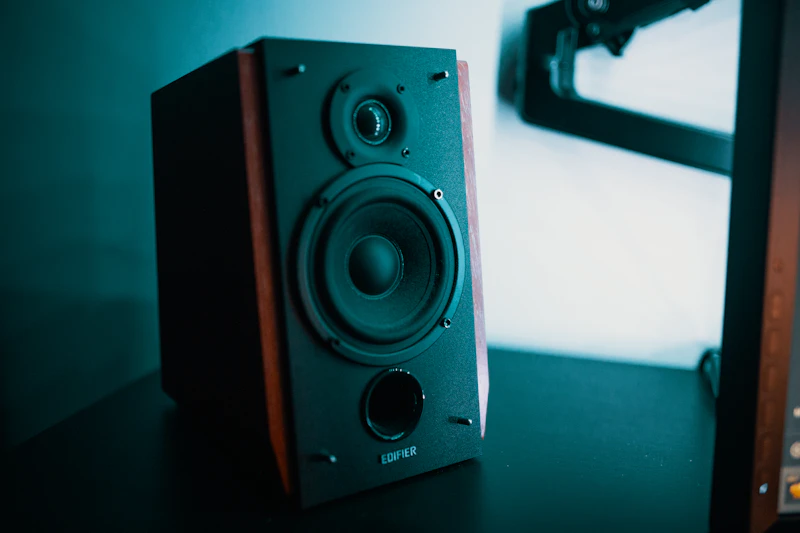
Bookshelf speakers are traditional two-way speakers positioned on stands or shelves flanking your TV. They require a separate amplifier or receiver, speaker wire, and placement consideration. The setup is more involved, but the audio quality reward is significant.
The ELAC Debut 2.0 B6.2 is a bookshelf speaker that outperforms soundbars costing two to three times as much. The 6.5-inch woofer produces bass that most soundbars cannot approach, and the treble clarity reveals details in music and dialogue that soundbars smooth over.
Bookshelf speaker advantages: superior sound quality per dollar, real stereo imaging (physically separated speakers create a true soundstage), upgradability (add a subwoofer, add surrounds, upgrade amplifier), and longevity (quality passive speakers last decades).
Sound Quality Comparison
At any given price point, bookshelf speakers deliver better audio quality than soundbars. The physics are simple: larger, physically separated drivers with dedicated amplification produce better sound than small drivers crammed into a narrow enclosure.
A $300 pair of bookshelf speakers with a $150 amplifier outperforms a $500 soundbar in virtually every audio metric — bass depth, midrange clarity, treble detail, and stereo imaging.
However, premium soundbars (Sonos Arc, Samsung Q990D, JBL Bar 1300X) have narrowed the gap significantly. A $900 soundbar system with wireless surrounds and a subwoofer approaches the performance of a traditional speaker setup, though purists will still prefer separates.
Setup Complexity
Soundbar: connect HDMI cable, plug in power, pair the subwoofer wirelessly if applicable. Total time: 5 minutes.
Bookshelf speakers: position speakers on stands or shelves, run speaker wire from each speaker to the amplifier, connect the amplifier to the TV via HDMI or optical, configure amplifier settings. Total time: 30 to 60 minutes.
The bookshelf speaker setup is not difficult, but it is more involved and creates more visible cables and equipment. In a living room where aesthetics matter, the soundbar's clean look is a genuine advantage.
Space Requirements
Soundbars sit below the TV and take up minimal space. Some mount directly to the wall beneath a wall-mounted TV, creating a seamless integrated look.
Bookshelf speakers need stands or shelf space on either side of the TV. An amplifier or receiver needs a shelf in or near the TV console. Speaker wire needs to run from the amplifier to each speaker. The space footprint is larger.
Upgrading and Flexibility
Soundbar systems are largely closed — you buy the bar, maybe add matching surrounds and subwoofer from the same brand, and that is your system.
Bookshelf speakers are the starting point of a modular system. Add a subwoofer for better bass. Add a center channel for clearer dialogue. Add surround speakers for immersive movie sound. Upgrade the amplifier for more power. Upgrade individual speakers as budget allows. The same bookshelf speakers you buy today can anchor a 5.1 surround system next year.
The Practical Decision
Buy a soundbar if: you want the simplest possible upgrade from TV speakers, aesthetics and minimal cables are priorities, you do not want to manage an amplifier and speaker wire, or you want smart features built in.
Buy bookshelf speakers if: audio quality is your priority, you enjoy the process of building and optimizing an audio system, you want the flexibility to upgrade incrementally, or you listen to music as much as you watch TV.
The Middle Ground
Powered bookshelf speakers — speakers with built-in amplifiers — bridge the gap. They offer better sound quality than soundbars with simpler setup than traditional passive speakers. Connect them to your TV with an optical cable or Bluetooth, and you have excellent audio without a separate amplifier.
The Bottom Line
For most people who want a straightforward upgrade from TV speakers, a soundbar is the right choice. The convenience, aesthetics, and smart features justify the audio quality trade-off. For audio enthusiasts willing to invest more time in setup, bookshelf speakers deliver a listening experience that no soundbar can match. Both options are massive improvements over the thin, weak speakers built into modern TVs.
As an Amazon Associate, BestElectronicsReviewed earns from qualifying purchases.
Recommended Products
Top picks from our buying guides
Related Articles
Updated: How to Organize Your Desk Setup for Maximum Productivity (Spring 2026)
Updated: How to Organize Your Desk Setup for Maximum Productivity (Spring 2026) — expert analysis and tested recommendations from BestElectronicsReviewed.
TipsEssential Tech for Architects and Designers
Architecture demands serious computing power for CAD and rendering, precise displays for color accuracy, and collaborative tools that bridge the studio and job site.
TipsMust-Have Tech for Interior Designers
Modern interior design blends creativity with technology. From color-accurate displays to 3D rendering tools, here's the tech that gives designers a competitive edge.