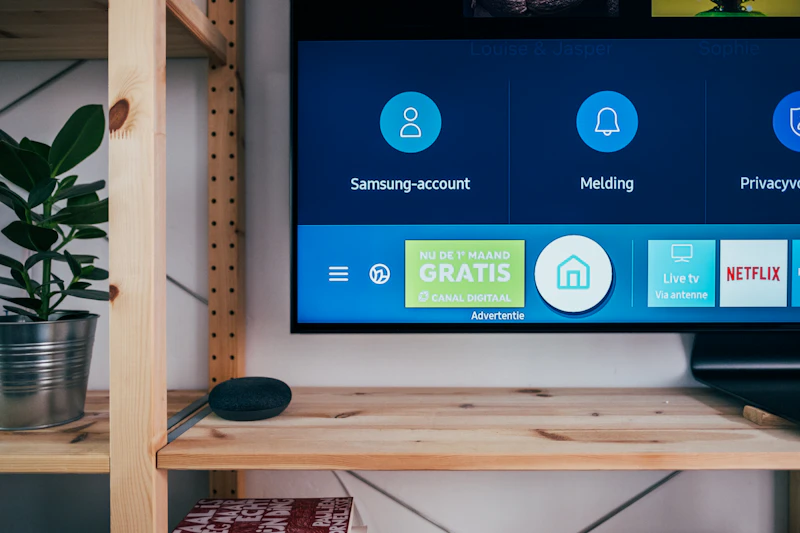
Projector vs Large TV: The Home Theater Decision
A projector gives you a 100-inch+ screen for the price of a 65-inch TV. But there are trade-offs. Here's the complete comparison for your home theater setup.
BestElectronicsReviewed.com is a participant in the Amazon Services LLC Associates Program. We may earn a commission from qualifying purchases made through links on this page, at no extra cost to you.
The dream of a massive screen in your living room has never been more achievable. A quality projector creates a 100 to 150-inch image for $1,000 to $2,000, while a 75-inch TV costs $800 to $2,500 and an 85-inch costs $1,500 to $5,000. The projector clearly wins on size per dollar, but the comparison involves more factors than screen size alone.
Screen Size: Projector Wins Overwhelmingly
This is the projector's biggest advantage and the primary reason to consider one. A 100-inch projected image provides an immersive, cinema-like experience that even the largest consumer TVs cannot match.
The Epson Home Cinema 2350 projects a 100-inch image from approximately 10 feet away, delivering 4K-enhanced picture quality with 2,800 lumens of brightness.
At $1,000, this projector provides a 100-inch image. A 100-inch TV would cost $3,000 to $10,000 or more. The value proposition is dramatic.
Brightness: TV Wins
TVs produce their own light at 500 to 2,000+ nits. Projectors project light onto a screen, and ambient room light washes out the image.
In a dark room, a quality projector looks stunning. In a bright living room with afternoon sunlight, even a premium projector struggles against ambient light. This is the projector's biggest weakness.
If you cannot control the room lighting during viewing — open floor plans, west-facing windows, family members who want lights on — a TV provides better visibility in all conditions.
Read our projector buying guide →
Image Quality: TV Wins on Paper, Projector Wins on Experience
In a controlled comparison, a premium TV — especially OLED — provides better contrast, more accurate colors, and higher brightness than a projector. The technology is simply more capable on a per-pixel basis.
But image quality is about more than technical specs. The immersive experience of a 100 to 120-inch projected image makes movies feel like a theater experience, which enhances emotional engagement in ways that a 65-inch TV cannot match. Many viewers prefer the projector experience despite the technical inferior image quality because the sheer size creates a qualitatively different viewing experience.
Audio: Both Need External Sound
Neither projectors nor TVs have adequate built-in speakers for serious entertainment. Both require a soundbar or surround sound system for a proper home theater experience. This is a wash — budget for external audio regardless of which display you choose.
The Sonos Arc provides Dolby Atmos sound that pairs well with either a projector or a large TV for a complete home theater experience.
Installation Complexity
A TV mounts on the wall or sits on a stand. Plug in the power cord, connect the streaming device, and you are watching.
A projector requires more planning: placement (ceiling mount, shelf, or short-throw from a media console), screen (dedicated screen, white wall, or pull-down), cable routing (HDMI from projector to source), and potentially power at the ceiling for a ceiling mount. The installation is manageable for a handy homeowner but more involved than a TV.
Maintenance and Lifespan
TVs require essentially zero maintenance and last 7 to 10+ years. Projectors require lamp replacement every 3,000 to 5,000 hours ($50 to $200 per lamp) for lamp-based models, or have LED/laser light sources that last 20,000 to 30,000 hours with no replacement needed.
Laser and LED projectors have largely eliminated the maintenance advantage of TVs. If you choose a laser projector, maintenance is comparable to a TV.
Daily Use Convenience
TVs turn on instantly, display a clear picture in any lighting, and are always ready. Projectors need the room darkened, take a moment to warm up (though modern units are fast), and may require screen adjustment.
For primary daily-use entertainment in a bright living room, a TV is more convenient. For a dedicated entertainment space used primarily in the evenings, a projector delivers the theatrical experience.
The Decision Framework
Buy a projector if: you want 100+ inch screen size, you have a room you can darken, you have space for proper projector placement, and you value the immersive experience above technical image quality.
Buy a large TV if: you watch in a bright room, you want plug-and-play simplicity, you value peak image quality over screen size, or you want a primary display that works in all lighting conditions.
The Hybrid Solution
Some households install both — a 65-inch TV for daily bright-room viewing and a projector on a pull-down screen for movie nights. This costs more but provides the ideal viewing experience for both use cases.
As an Amazon Associate, BestElectronicsReviewed earns from qualifying purchases.
Recommended Products
Top picks from our buying guides
Samsung QN90D Neo QLED 4K TV (65\
#1 in Best TVs of 2026: Top Picks for Every Room and Budget
Check PriceRelated Articles
Updated: How to Organize Your Desk Setup for Maximum Productivity (Spring 2026)
Updated: How to Organize Your Desk Setup for Maximum Productivity (Spring 2026) — expert analysis and tested recommendations from BestElectronicsReviewed.
TipsEssential Tech for Architects and Designers
Architecture demands serious computing power for CAD and rendering, precise displays for color accuracy, and collaborative tools that bridge the studio and job site.
TipsMust-Have Tech for Interior Designers
Modern interior design blends creativity with technology. From color-accurate displays to 3D rendering tools, here's the tech that gives designers a competitive edge.