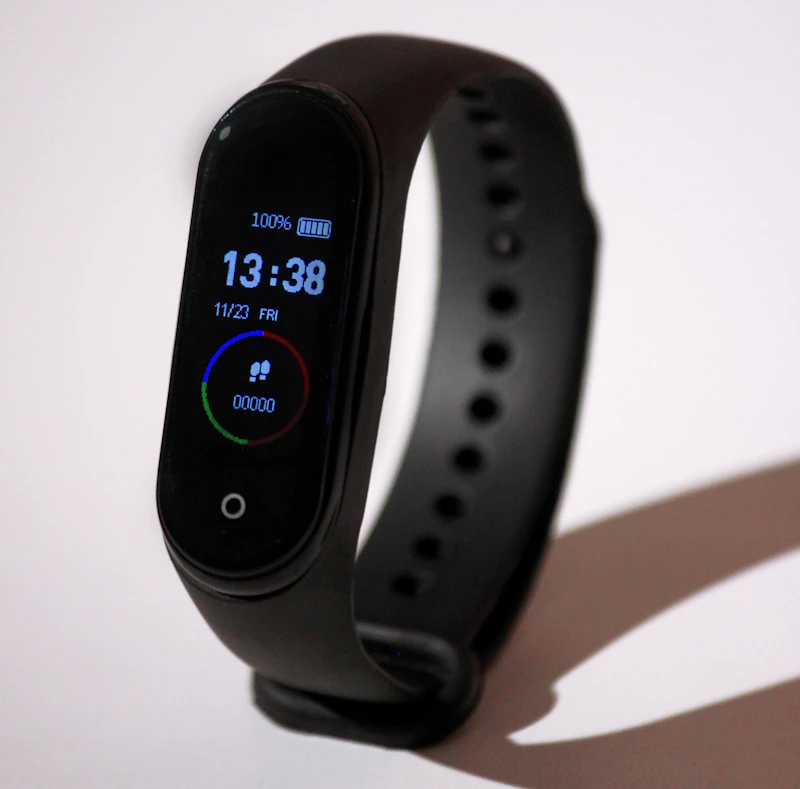
Fitbit Charge 6 vs Garmin Vivosmart 5: Which Budget Tracker Is Better?
Two of the best mid-range fitness trackers go head to head. We compare accuracy, battery life, app quality, and real-world performance.
BestElectronicsReviewed.com is a participant in the Amazon Services LLC Associates Program. We may earn a commission from qualifying purchases made through links on this page, at no extra cost to you.
The Fitbit Charge 6 and Garmin Vivosmart 5 sit in the same $100-$160 price bracket and target similar buyers — people who want reliable fitness tracking without the bulk or price of a full smartwatch. After wearing both for six weeks, the differences are more significant than the spec sheets suggest.
Design and Display
The Fitbit Charge 6 has a brighter, more colorful AMOLED display than its predecessor. The screen is responsive and readable outdoors. It uses a side button plus touchscreen for navigation, and the aluminum case feels premium for the price.
The Garmin Vivosmart 5 keeps things simpler with a smaller OLED touchscreen. It's narrower and lighter, which some people prefer for all-day wear, but the display isn't as vibrant. The screen can be hard to read in bright sunlight without cupping your hand over it.
Winner: Fitbit Charge 6 for screen quality and overall build.
Fitness and Health Tracking
Both track steps, heart rate, sleep, blood oxygen, and stress. But their approaches differ.
Fitbit Charge 6 introduced Google integration, bringing Google Maps navigation and Google Wallet to a fitness band. It also added compatibility with gym equipment via Bluetooth — connect to treadmills, ellipticals, and stationary bikes at commercial gyms for automatic workout syncing. The Active Zone Minutes system translates heart rate data into a simple weekly target.
Garmin Vivosmart 5 focuses on Garmin's Body Battery energy monitoring, which scores your energy from 0-100 throughout the day. It's surprisingly accurate — after a bad night's sleep, your Body Battery will be low, and it genuinely corresponds to how you feel. Garmin also offers more detailed workout metrics for runners and cyclists.
Winner: Tie. Fitbit for gym integration and ease of use. Garmin for Body Battery and training metrics.
GPS and Outdoor Tracking
Neither device has built-in GPS. Both rely on connected GPS through your phone. This is a notable limitation if you run or cycle without your phone. In our testing, connected GPS accuracy was similar on both — roughly 3-5% distance variance compared to a dedicated GPS watch.
If GPS matters to you, step up to the Garmin Venu Sq 2 ($200) which includes built-in GPS, or the Fitbit Charge 6 occasionally locks onto GPS faster through phone tethering.
Winner: Draw.
App Experience
The Fitbit app has been rebuilt with Google's influence, and it's cleaner than ever. The daily readiness score, health metrics dashboard, and trend tracking are intuitive. However, many premium features (advanced sleep analytics, health reports, guided programs) require Fitbit Premium ($10/month or $80/year).
Garmin Connect is more data-dense but also more complex. Every metric is available for free — no subscription required. Advanced users love the depth of data. Casual users sometimes find it overwhelming. The Garmin Connect training plans and insights are included at no extra cost.
Winner: Garmin Vivosmart 5 for value (no subscription). Fitbit Charge 6 for interface polish (if you pay for Premium).
Battery Life
Garmin Vivosmart 5 delivers up to 7 days of battery life consistently. Fitbit Charge 6 claims 7 days but typically lands around 5 days with always-on display enabled and regular workout tracking. Disable the always-on display and Fitbit stretches closer to the advertised 7 days.
Winner: Garmin Vivosmart 5 by a consistent 1-2 day margin.
Notifications and Smart Features
Fitbit Charge 6 handles notifications from any phone app, lets you accept or reject calls, and includes Google Wallet for contactless payments. Garmin Vivosmart 5 mirrors notifications and lets you reply to texts on Android (not iPhone) with preset messages. Neither replaces a smartwatch for messaging.
Winner: Fitbit Charge 6 with Google Wallet and better notification handling.
Who Should Buy Which?
Buy the Fitbit Charge 6 if you want the best screen, gym equipment connectivity, Google ecosystem integration, and you don't mind paying for Premium to unlock all features.
Buy the Garmin Vivosmart 5 if you want longer battery life, better energy monitoring with Body Battery, free access to all features, and you prefer a smaller form factor. For athletes who want deeper training metrics without a subscription, Garmin is the better long-term value.
As an Amazon Associate, BestElectronicsReviewed earns from qualifying purchases.
Recommended Products
Top picks from our buying guides
Related Articles
eero Pro 6E vs Nest WiFi Pro: Mesh Router Comparison
Two premium mesh router systems compete for your home network. We tested coverage, speed, setup, and smart home integration in a 2,400 sq ft home.
ComparisonsGuide: OLED vs Mini-LED Monitors: Which Display Is Better in 2026 (This Week)
Guide: OLED vs Mini-LED Monitors: Which Display Is Better in 2026 (This Week) — expert analysis and tested recommendations from BestElectronicsReviewed.
ComparisonsUpdated: OLED vs Mini-LED Monitors: Which Display Is Better in 2026
Updated: OLED vs Mini-LED Monitors: Which Display Is Better in 2026 — expert analysis and tested recommendations from BestElectronicsReviewed.