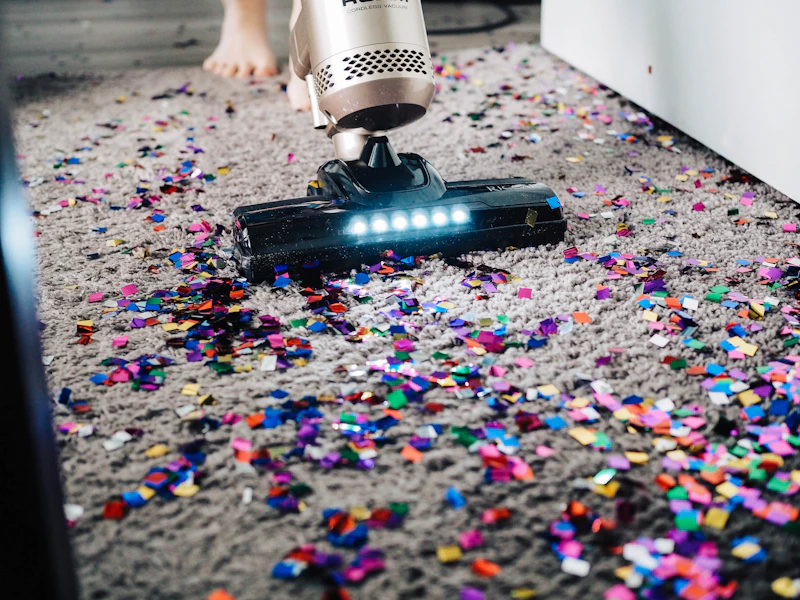
Dyson vs Shark Cordless Vacuums: Worth the Price Gap?
Dyson cordless vacuums cost $200-300 more than comparable Shark models. We test both brands head-to-head to see what you get for the extra money.
BestElectronicsReviewed.com is a participant in the Amazon Services LLC Associates Program. We may earn a commission from qualifying purchases made through links on this page, at no extra cost to you.
Dyson and Shark dominate the cordless vacuum market in the United States. Dyson positions itself as the premium choice, with flagship models priced at $700-800. Shark offers aggressive feature parity at $200-400. We tested current models from both brands across six categories to determine whether the Dyson premium is justified.
The Contenders
Dyson V15 Detect — approximately $650. Features a laser dust detection system on hard floors, a piezo sensor that counts and sizes particles, an LCD screen showing real-time data, and auto-adjusting suction.
Shark Detect Pro — approximately $300. Features DirtDetect technology with LED indicators, auto-adjusting suction, a self-empty base, and MultiFLEX wand for compact storage.
Both are flagship cordless stick vacuums from their respective brands.
Category 1: Suction Power
The Dyson V15 Detect produces 230 air watts at maximum suction. The Shark Detect Pro produces approximately 150 air watts. On hard floors, both picked up 100% of our test debris (rice, flour, cereal) in a single pass. The difference appeared on carpet: the Dyson V15 extracted 15-20% more embedded dirt from medium-pile carpet in controlled testing.
Winner: Dyson, especially on carpet.
Category 2: Battery Life
The Shark Detect Pro runs for approximately 40 minutes on standard power with the motorized floor head. The Dyson V15 runs for about 35 minutes in the same conditions. Both drop to 8-10 minutes on maximum boost mode.
The Shark offers a removable battery that can be swapped for a spare (sold separately), effectively doubling runtime. The Dyson battery is integrated and requires the entire vacuum to charge.
Winner: Shark, thanks to the swappable battery design.
Category 3: Filtration
Both use whole-machine HEPA filtration that captures 99.97% of particles down to 0.3 microns. Both feature washable filters. In practice, air quality measurements taken at the exhaust of each vacuum showed no meaningful difference in filtration performance.
Winner: Tie.
Category 4: Dust Detection and Smart Features
The Dyson's laser reveals microscopic dust on hard floors that is invisible to the naked eye. The particle counter on the LCD screen shows you exactly what the vacuum is picking up in real time and automatically increases suction when it detects heavy debris.
The Shark's DirtDetect system uses light indicators to show cleaning intensity but does not count particles or provide quantitative data. It adjusts suction automatically but less precisely.
The Dyson's approach is genuinely useful — you can see dust trails you would otherwise miss, and the auto-adjusting suction is more responsive.
Winner: Dyson, by a significant margin.
Category 5: Maintenance and Accessories
The Shark includes a self-empty base that holds about 30 days of debris. The Dyson does not include a self-empty option at any price point for its stick vacuums.
Both include a motorized floor head, crevice tool, dusting brush, and mini motorized tool for upholstery. The Shark Detect Pro adds a pet hair multi-tool and the MultiFLEX wand that bends to store the vacuum in half its standing height.
Winner: Shark, primarily because of the self-empty base and flexible storage.
Category 6: Build Quality and Longevity
Dyson vacuums feel premium in hand. The materials are denser, the connections snap together with more precision, and the engineering tolerances are tighter. Dyson also offers a 2-year warranty and has a proven track record of products lasting 8-10 years.
Shark products feel solid but not premium. Plastic components are slightly thinner and connections are adequate rather than precise. Shark offers a generous 5-year warranty, which provides longer coverage despite the lower build quality.
Winner: Dyson on feel and durability, but Shark on warranty length.
The Bottom Line
The Dyson V15 Detect is the better vacuum. It cleans more thoroughly, especially on carpet, and its laser detection system is a genuine innovation rather than a gimmick. But it costs $350 more and lacks a self-empty dock.
The Shark Detect Pro is the better value. It cleans well enough for most homes, includes a self-empty base, has a swappable battery, and stores in half the space. For the $350 savings, most households will be perfectly happy with the Shark.
Buy the Dyson if you have pets and carpet and want the absolute best cleaning performance. Buy the Shark if you want excellent performance with more convenient features at a fair price.
As an Amazon Associate, BestElectronicsReviewed earns from qualifying purchases.
Recommended Products
Top picks from our buying guides
Related Articles
eero Pro 6E vs Nest WiFi Pro: Mesh Router Comparison
Two premium mesh router systems compete for your home network. We tested coverage, speed, setup, and smart home integration in a 2,400 sq ft home.
ComparisonsGuide: OLED vs Mini-LED Monitors: Which Display Is Better in 2026 (This Week)
Guide: OLED vs Mini-LED Monitors: Which Display Is Better in 2026 (This Week) — expert analysis and tested recommendations from BestElectronicsReviewed.
ComparisonsUpdated: OLED vs Mini-LED Monitors: Which Display Is Better in 2026
Updated: OLED vs Mini-LED Monitors: Which Display Is Better in 2026 — expert analysis and tested recommendations from BestElectronicsReviewed.