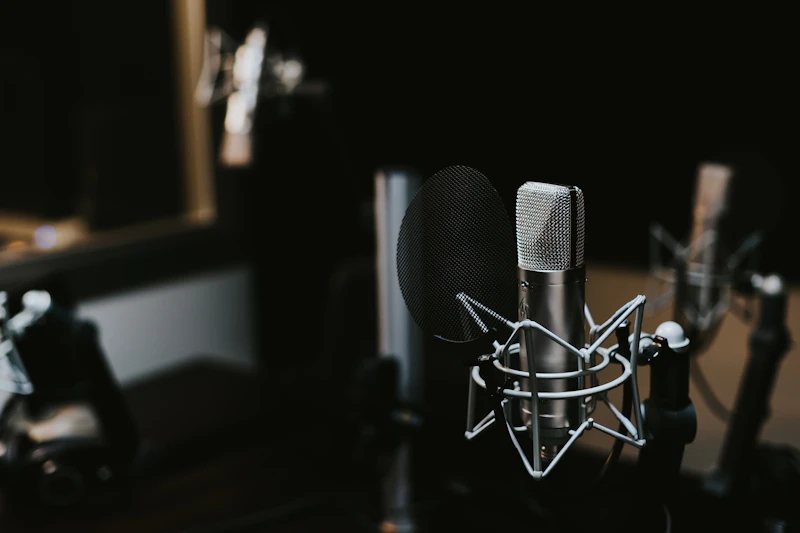
Best Tech for Podcast Producers
Professional podcasting demands more than a USB mic and free software. Here's the complete tech stack for producing polished, audience-growing podcast content.
BestElectronicsReviewed.com is a participant in the Amazon Services LLC Associates Program. We may earn a commission from qualifying purchases made through links on this page, at no extra cost to you.
Podcasting has matured from a hobbyist pursuit into a legitimate media industry, and the technical bar has risen accordingly. Listeners in 2026 expect broadcast-quality audio, consistent releases, and polished production. The good news is that the technology to achieve all of this has become more accessible and affordable than ever. Here is the complete tech stack for serious podcast production.
Microphone: The Single Most Important Investment
Your microphone determines 80 percent of your audio quality. Room treatment, preamps, and processing all matter, but they cannot fix a bad microphone.
For USB simplicity with professional results, the Elgato Wave:3 is exceptional. Its internal digital mixer prevents clipping, the cardioid pattern rejects room noise effectively, and it connects via USB-C. For producers ready to invest in an XLR setup, the Shure SM7B is the microphone you see behind virtually every professional podcaster. Its dynamic capsule naturally rejects room noise, making it forgiving of imperfect recording environments.
Audio Interface: The XLR Path
If you go with XLR microphones, you need an audio interface to convert the analog signal to digital. The interface also provides phantom power, gain control, and monitoring.
The Focusrite Scarlett 2i2 4th Gen is the most popular podcasting interface for good reason. Two XLR inputs handle a host-plus-guest setup, the preamps are clean and quiet, and the air mode adds a subtle brightness that flatters voice recordings. USB-C connectivity ensures compatibility with modern laptops.
Headphones: Monitor What You Record
You must monitor your audio while recording. Open-back headphones sound more natural, but closed-back headphones prevent mic bleed when monitoring live — which matters if your guest is in the same room.
The Audio-Technica ATH-M50x remains the industry standard for podcast monitoring. The closed-back design isolates sound in both directions, the flat frequency response lets you hear problems in real time, and the comfort level supports multi-hour recording sessions. Buy a pair for every regular participant to ensure nobody is listening through speakers and creating feedback.
Recording Environment: Acoustic Treatment
The most overlooked aspect of podcast production is the recording space. No amount of post-processing can fully fix a room with hard walls, glass surfaces, and echo.
Basic acoustic treatment makes a dramatic difference. Foam panels on the walls behind and to the sides of each speaker, a thick rug on the floor if it is hard surface, and heavy curtains on any windows. If you record in a home office, a portable vocal booth or reflection filter behind your microphone is the minimum investment.
Recording and Editing Software
For recording, many producers use dedicated recording software separate from their editing tools. This ensures a clean, uncompressed capture regardless of what happens downstream.
For editing, Adobe Audition and Logic Pro are the professional standards, but Hindenburg Journalist is specifically designed for spoken-word production and automates many tedious editing tasks. Its automatic loudness normalization and noise reduction save hours per episode.
Portable Recording Kit: Field Interviews
Not every interview happens in your studio. A portable recording kit lets you capture professional-quality audio at conferences, events, and remote locations.
The Zoom H6essential is a portable multitrack recorder that captures four inputs simultaneously in 32-bit float — meaning you literally cannot clip the audio regardless of volume spikes. Pair it with two lavalier microphones for interview setups, and you have a field recording rig that fits in a backpack.
Camera for Video Podcasting
Video podcasting is no longer optional for growth. YouTube is now the second-largest podcast platform, and clips on social media drive audience discovery.
A quality webcam handles basic video podcasting, but a dedicated camera provides significantly better image quality. Mount it on a tripod behind or beside your laptop and frame a medium shot. Proper lighting matters more than camera quality — a key light and fill light eliminate the unflattering shadows that make video podcasts look amateur.
Show Notes and Distribution
Your workflow beyond recording includes show notes, transcription, distribution, and promotion. AI transcription services have made show notes dramatically easier — upload your episode and receive a complete transcript in minutes, from which you extract key quotes and timestamps.
For distribution, a podcast hosting platform handles RSS feed generation and pushes your episodes to Apple Podcasts, Spotify, and every other platform simultaneously. Most hosting platforms also provide analytics that show listener demographics, episode performance, and growth trends.
The Investment
A complete podcast production setup runs $500 to $3,000. A USB microphone path (Elgato Wave:3, headphones, basic treatment) costs under $500 and produces professional results. An XLR path (Shure SM7B, Focusrite interface, headphones, treatment) costs $800 to $1,200. Adding video and portable recording equipment brings the total to $2,000 to $3,000.
The key insight: start with the USB path, grow your audience, and upgrade to XLR when your show's revenue justifies the investment. The audio quality difference between a well-used $150 USB mic and a $400 XLR setup is smaller than most people think.
As an Amazon Associate, BestElectronicsReviewed earns from qualifying purchases.
Recommended Products
Top picks from our buying guides
Related Articles
Updated: How to Organize Your Desk Setup for Maximum Productivity (Spring 2026)
Updated: How to Organize Your Desk Setup for Maximum Productivity (Spring 2026) — expert analysis and tested recommendations from BestElectronicsReviewed.
TipsEssential Tech for Architects and Designers
Architecture demands serious computing power for CAD and rendering, precise displays for color accuracy, and collaborative tools that bridge the studio and job site.
TipsMust-Have Tech for Interior Designers
Modern interior design blends creativity with technology. From color-accurate displays to 3D rendering tools, here's the tech that gives designers a competitive edge.