Why Expensive Headphones Aren't Always Better Than Budget Ones
We tested headphones from $25 to $550 and the results surprised us. After a certain price point, you're paying for diminishing returns. Here's where the sweet spot is.
BestElectronicsReviewed.com is a participant in the Amazon Services LLC Associates Program. We may earn a commission from qualifying purchases made through links on this page, at no extra cost to you.
The headphone market has a dirty secret: the relationship between price and audio quality is not linear. A $200 headphone does not sound twice as good as a $100 headphone. In many cases, a $50 headphone delivers 80% of the experience of a $300 one. Here is what our testing revealed and where you should actually draw the line.
The Diminishing Returns Curve
Audio equipment follows a well-documented diminishing returns curve. Here is roughly how it breaks down:
- $0-50: Massive quality jumps with every dollar spent. Going from $10 earbuds to a $40 pair is transformative.
- $50-150: Significant improvements. Better drivers, better build, ANC appears, sound stage widens.
- $150-300: Noticeable improvements, but you need to listen carefully. Better tuning, materials, and features.
- $300-600: Subtle improvements. Audiophile-grade differences that most listeners cannot detect in blind tests.
- $600+: Luxury tier. Incremental improvements in very specific aspects. Mostly paying for brand, materials, and prestige.
The sweet spot for most people — the point where you get the best quality-per-dollar — is $100-200.
What Expensive Headphones Actually Buy You
Premium headphones are not a scam. The extra money goes somewhere real:
Better Drivers and Tuning
Higher-end headphones use larger, more precisely manufactured drivers with tighter tolerances. The frequency response is more carefully tuned, often by professional audio engineers. The result is more accurate, detailed sound — but the difference requires trained ears and quality source material to appreciate.
Better Build Quality and Materials
Premium headphones use stainless steel headbands, memory foam ear cushions, replaceable cables, and precision hinges. They feel more solid, last longer, and are more comfortable during extended listening sessions.
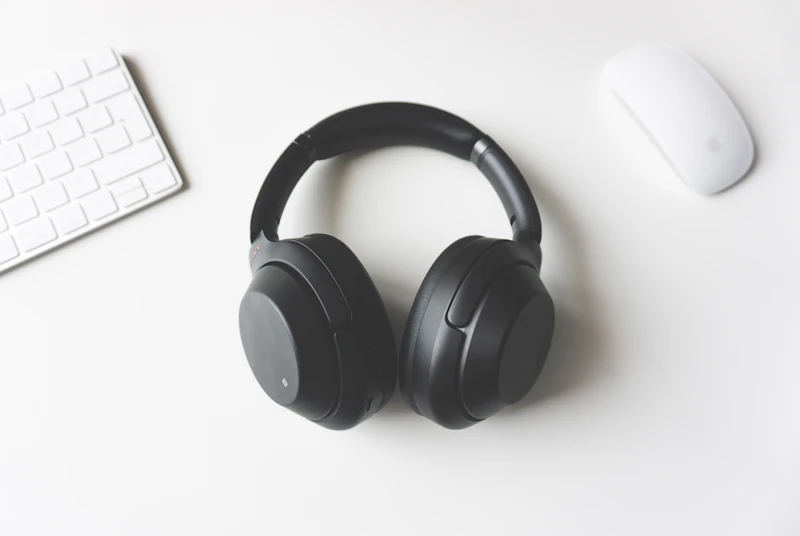
The Sony WH-1000XM5 ($300-350) uses synthetic leather pads and lightweight carbon fiber in its construction. It feels noticeably more premium than the XM4 — but it does not sound dramatically different.
Better ANC (Active Noise Cancellation)
ANC quality is strongly correlated with price. Budget ANC headphones reduce noise by 15-20 dB. Premium models like the Sony XM5 and Apple AirPods Max reduce noise by 30-35 dB. For frequent flyers and office workers, this difference is worth paying for.
Better Microphone Quality
Call quality varies enormously. Budget headphones sound muffled and pick up background noise. Premium models have multi-microphone arrays with AI-powered noise isolation that makes you sound like you are in a recording studio.
Where Budget Headphones Win
Casual Listening
If you listen to Spotify on your commute, at the gym, or while doing housework, you are not in conditions where premium audio quality matters. Background noise, compressed streaming audio, and distracted attention mean you cannot take advantage of superior drivers.
The Anker Soundcore Life Q30 ($60-80) offers impressive ANC, 40-hour battery life, and sound quality that reviewers consistently compare to headphones twice its price. For casual use, this is more than enough.
Gym and Outdoor Use
Expensive headphones are a liability at the gym. Sweat, drops, and rough handling degrade any headphone — and it hurts more when your $350 Sonys get sweat damage than your $40 earbuds.
For workouts, the JBL Tune 130NC offers IP54 water resistance, ANC, and solid bass for under $50. If you destroy them in a year, you have spent less than the warranty repair on premium earbuds.
Kids and Teens
This should be obvious, but children should not use $300 headphones. They lose them, break them, and do not appreciate the audio quality difference.
Backup and Travel Pairs
Having a cheap backup pair for travel (in case of loss or damage) or for lending to friends makes more practical sense than risking your primary expensive pair.
The Blind Test Reality
Multiple independent studies have shown that in double-blind listening tests, most people — including self-described audiophiles — struggle to reliably distinguish between mid-range ($150-200) and premium ($400+) headphones when source material and volume are controlled.
The differences are real, but they are subtle. Trained audio engineers hear them. Average consumers choosing between Spotify playlists generally do not.
Where Expensive Is Justified
Some use cases genuinely benefit from premium headphones:
Professional Audio Work
If you are mixing, mastering, or producing music, accurate frequency response and flat tuning matter for your work product. Studio monitors like the Audio-Technica ATH-M50x ($130-150) are considered the entry point for professional use. Above that, the Sennheiser HD 600 ($270-330) is a reference standard.
Critical Listening
If you own a dedicated DAC/amp, subscribe to a lossless streaming service, and listen to well-mastered recordings in a quiet room, you will appreciate premium headphones. The Sennheiser HD 600 open-back design creates a soundstage that budget headphones cannot replicate.
All-Day Office Use
If you wear headphones 8+ hours a day for work, comfort and ANC quality justify the premium. The difference between cheap ear cushions that cause pressure points after 2 hours and premium memory foam that stays comfortable all day is worth $150-200 to most people.
Frequent Air Travel
Airplane cabin noise is relentless. Premium ANC from Sony or Bose reduces it to a whisper. Budget ANC reduces it to a murmur. Over a 6-hour flight, that difference in noise reduction compounds into significantly less fatigue.
Our Recommendation: The Smart Spending Strategy
- Casual listener: Spend $50-80. The Anker Soundcore Q30 or JBL Tune series.
- Daily commuter: Spend $100-150. Previous-gen premium models (Sony XM4 for the price of an XM5 discount, for example).
- Office worker (8+ hours): Spend $200-350. Sony XM5 or Bose QC Ultra.
- Audiophile or professional: Spend $200-400 on wired open-backs. Sennheiser HD 560S to HD 600 range.
- Everyone: Skip the $500+ tier unless you have specifically identified a feature only available at that price.
The headphone industry depends on convincing you that more expensive always means better. In reality, the best headphone for you is the one that fits your use case, budget, and head comfortably — not the one with the highest price tag.
Read our complete headphone guide →
As an Amazon Associate, BestElectronicsReviewed earns from qualifying purchases.
Recommended Products
Top picks from our buying guides
Sony WH-1000XM5
#1 in Best Affordable Noise Cancelling Headphones for Your Setup 2026
Check PriceRelated Articles
Guide: Why USB-C Cables Are Not All the Same: A Technical Guide (Spring 2026)
Guide: Why USB-C Cables Are Not All the Same: A Technical Guide (Spring 2026) — expert analysis and tested recommendations from BestElectronicsReviewed.
Deep DiveWhy Ultrawide Monitors Are Better Than Dual Monitors
Two monitors or one ultrawide? After testing both setups extensively, the ultrawide wins for most people. Here's the detailed case.
Deep DiveWhy USB-C Cables Are Not All the Same: A Technical Guide (March 2026)
Why USB-C Cables Are Not All the Same: A Technical Guide (March 2026) — expert analysis and tested recommendations from BestElectronicsReviewed.