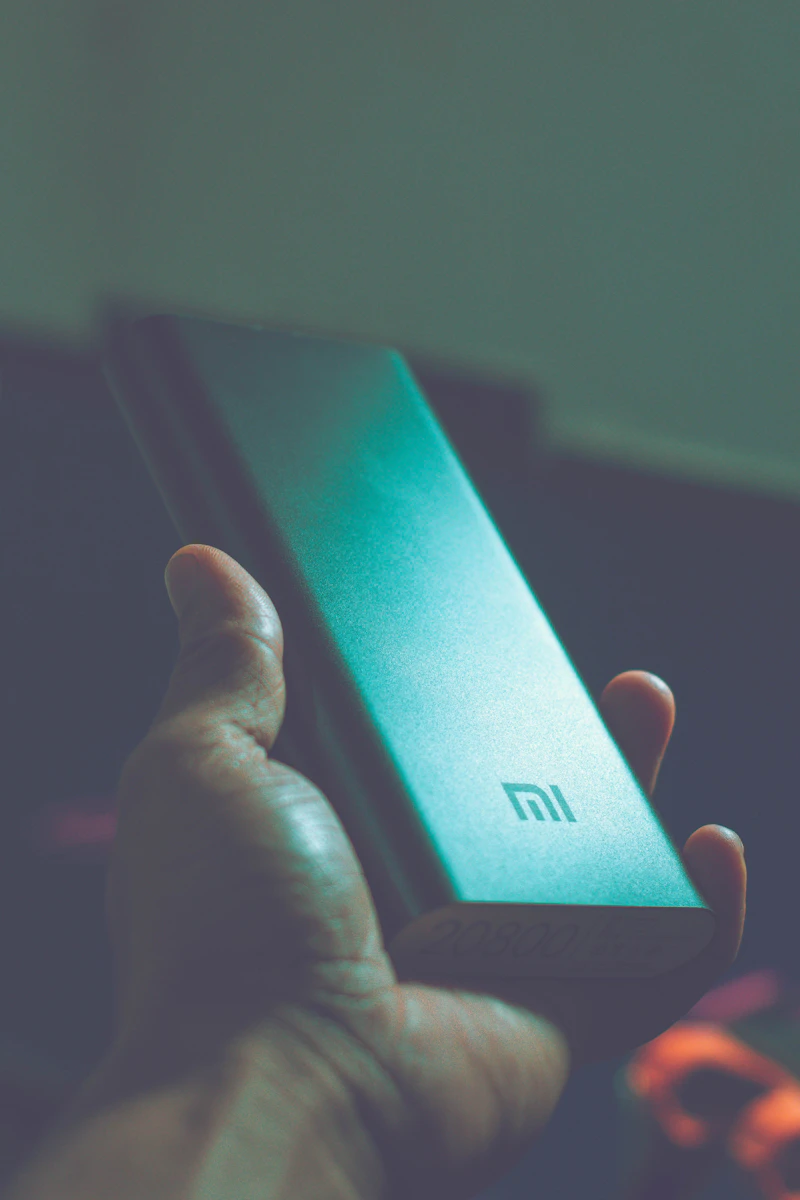
What to Look for in a Portable Charger
Not all portable chargers are created equal. Here's how to decode the specs and find the right power bank for your actual needs without overpaying.
BestElectronicsReviewed.com is a participant in the Amazon Services LLC Associates Program. We may earn a commission from qualifying purchases made through links on this page, at no extra cost to you.
Portable chargers range from $10 lipstick-sized tubes to $150 laptop-charging bricks. The spec sheets are full of numbers — milliamp hours, watts, voltage — that mean nothing without context. Here is a practical guide to understanding what matters, what does not, and how to pick the right power bank for your specific needs.
Capacity: How Much Power Do You Actually Need?
Capacity is measured in milliamp hours (mAh). Your phone's battery is typically 4,000-5,000mAh. A 10,000mAh power bank should theoretically charge your phone twice. In reality, energy conversion losses mean you get about 60-70% of the rated capacity as usable power. So a 10,000mAh bank delivers roughly 6,000-7,000mAh to your phone — still enough for 1.5 full charges.
For daily commuters: 5,000mAh is enough for one emergency top-up. Small enough to fit in a pocket.
For day trips and travel: 10,000mAh hits the sweet spot between capacity and portability. Handles 1.5-2 full charges for most phones.
For multi-day camping or international travel: 20,000mAh provides 3-4 full charges and can handle tablets and other devices.
For laptop charging: 25,000-30,000mAh with USB-C Power Delivery (65W or higher) is necessary. These are larger and heavier but eliminate the need to hunt for outlets during travel.
Output Power: Speed Matters
Capacity tells you how much power is stored. Output wattage tells you how fast it flows. A high-capacity bank with low output is like a big water tank with a tiny faucet — the water is there but takes forever to access.
5W output is painfully slow. It will charge your phone but takes 3-4 hours. Avoid power banks that only offer 5W unless they are intended purely as emergency backup.
18-20W output supports fast charging for most phones. A 0-50% charge takes about 30 minutes. This is the minimum you should target for a modern power bank.
30W+ output with USB-C Power Delivery can fast-charge recent iPhones and Samsung Galaxy phones at their maximum speed. The Anker 622 MagGo delivers 7.5W wirelessly with MagSafe attachment, which is slower but incredibly convenient for on-the-go use.
Ports: USB-C Is Non-Negotiable
At minimum, your power bank should have a USB-C port that handles both input (charging the bank) and output (charging your devices). USB-C PD (Power Delivery) is the universal fast-charging standard supported by Apple, Samsung, Google, and most laptop manufacturers.
A secondary USB-A port is useful for charging older devices or accessories. Some power banks include multiple USB-C ports for simultaneously charging two USB-C devices at full speed.
Avoid power banks that only have USB-A output ports — they are limited to older, slower charging standards and are not worth buying in 2026.
Size and Weight
This is where trade-offs become real. A 20,000mAh power bank weighs roughly 12-14 ounces — about the same as a can of soda. A 5,000mAh bank can weigh as little as 3-4 ounces. For everyday carry, size and weight matter as much as capacity.
A helpful rule: carry the smallest power bank that covers your typical usage gap. If you leave home at 100% and arrive home at 30%, a 5,000mAh bank is perfect. If you regularly end the day at 5%, size up to 10,000mAh.
Features Worth Paying For
Pass-through charging lets you charge your phone and the power bank simultaneously from one wall outlet. This is invaluable in hotels and airports where outlets are scarce.
LED capacity indicators tell you how much charge remains. A four-LED system is standard. Some premium banks include a small LCD showing exact percentage — a nice touch but not essential.
Built-in cables eliminate the need to carry a separate cable. Some banks include a short USB-C cable that folds into the body. The trade-off is that you cannot replace the cable if it fails.
MagSafe compatibility on banks like the Anker 622 MagGo lets iPhone 12+ users magnetically attach the power bank to the back of their phone. It charges wirelessly while mounted, and you can use your phone normally. The capacity is typically limited to 5,000mAh, but the convenience factor is enormous.
Features Not Worth Paying For
Solar panels on consumer power banks are generally too small to provide meaningful charging. They can trickle-charge in a pinch, but a single solar panel on a 10,000mAh bank takes 30-50 hours of direct sunlight to fully charge. They add weight and cost for minimal practical benefit.
Wireless charging on non-MagSafe banks is finicky without magnetic alignment. Your phone slides off on any non-flat surface, and the charging speed is limited to 5-7.5W. Unless it has MagSafe or Qi2 magnetic attachment, skip wireless.
Flashlights on power banks are weak and redundant when you already carry a phone with a flashlight. They add to the price without adding meaningful utility.
Airline Regulations
If you fly, capacity limits matter. The TSA and IATA allow power banks up to 100Wh (roughly 27,000mAh at 3.7V) in carry-on luggage without special permission. Banks between 100-160Wh require airline approval. Power banks above 160Wh are prohibited on flights.
All power banks must go in carry-on luggage, never checked bags. A quality tech organizer pouch keeps your power bank, cables, and adapters organized in your carry-on.
The Bottom Line
For most people, a 10,000mAh power bank with 20W+ USB-C PD output is the right choice. It provides enough capacity for a full day of backup power, charges quickly, and remains portable. Spend $25-40 from a reputable brand like Anker, Baseus, or Ugreen, and you will have reliable portable power for years.
As an Amazon Associate, BestElectronicsReviewed earns from qualifying purchases.
Recommended Products
Top picks from our buying guides
Related Articles
Best Kitchen Tech for Meal Prep
Meal prep is easier with the right gadgets. From food scales to vacuum sealers, these kitchen electronics save hours every week.
Buyer GuidesWhole House Water Filtration: Smart Filters and Monitoring Systems
From under-sink filters to whole-house systems, smart water filtration monitors filter life, detects contaminants, and ensures clean water from every tap.
Buyer GuidesBest Homework and Study Apps for Middle and High School Students
From math solvers to flashcard apps to essay helpers, these study tools help older students work smarter without doing the work for them.