What Is Matter and Why Your Smart Home Needs It
Matter is the new smart home standard backed by Apple, Google, Amazon, and Samsung. It promises to end the fragmentation that makes smart homes frustrating. Here's how it works and what it means for your devices.
BestElectronicsReviewed.com is a participant in the Amazon Services LLC Associates Program. We may earn a commission from qualifying purchases made through links on this page, at no extra cost to you.
The smart home has a fragmentation problem. Some lights work with Alexa but not HomeKit. Some sensors require a proprietary hub. Some devices use Zigbee, others use Z-Wave, and many use WiFi — none of which talk to each other without cloud bridges and compatibility hacks. Matter is the industry's attempt to fix this by creating one standard that works with every major ecosystem.
The Problem Matter Solves
Before Matter, buying a smart home device required answering a compatibility checklist:
- Does it work with Alexa?
- Does it work with Google Home?
- Does it work with Apple HomeKit?
- Does it need a hub?
- What wireless protocol does it use?
- Will it still work if the manufacturer's cloud servers go down?
Most consumers gave up after their first incompatible purchase. You'd buy a smart plug that works with Alexa but then realize it doesn't show up in Apple Home, or you'd invest in a Zigbee hub only to discover the specific device you wanted used Z-Wave.
Matter eliminates this entirely. A Matter-certified device works with Alexa, Google Home, Apple Home, and Samsung SmartThings — guaranteed. No checking compatibility lists, no hoping for future integration, no worrying about which voice assistant you use.
How Matter Works Technically
Matter runs over two local networking protocols: WiFi and Thread. WiFi is familiar — it uses your existing home network. Thread is a low-power mesh networking protocol specifically designed for smart home devices like sensors, locks, and switches that need to run on batteries for years.
The critical design decision is that Matter operates locally. Your smart devices communicate directly with your phone, hub, or controller over your local network without routing through cloud servers. This means:
- Faster response times — commands execute in milliseconds instead of the 1-3 seconds typical of cloud-dependent devices
- No internet dependency — your lights work even if your internet goes down
- Better privacy — device data stays on your local network instead of being sent to manufacturer servers
Every major smart home ecosystem — Alexa, Google Home, Apple Home, Samsung SmartThings — can act as a Matter controller. You set up a Matter device through any of these apps, and it automatically appears in all other compatible ecosystems.
What Devices Support Matter Today
Matter's initial scope covers the most common smart home categories:
- Lights and switches — on/off, dimming, color temperature, full RGB
- Smart plugs and outlets
- Thermostats and HVAC controls
- Door locks
- Sensors — motion, contact, temperature, humidity
- Window blinds and shades
- Robot vacuums (added in 2025)
Notable absences: cameras and doorbells are still in development for Matter support. Audio/video devices are not yet part of the specification.
The Eve Motion sensor is one of the first Thread-based Matter sensors — it works with any Matter controller, runs on batteries, and doesn't need a proprietary hub.
Thread: Matter's Secret Weapon
Thread is the networking layer that makes Matter special for battery-powered devices. Unlike WiFi (which drains batteries quickly) or Bluetooth (which has limited range), Thread creates a self-healing mesh network where devices relay messages to each other.
Every Thread device acts as a potential relay point. If one device fails, messages automatically reroute through other devices. The network becomes more reliable as you add more devices, not less.
Thread Border Routers connect the Thread mesh to your WiFi network. Apple TV 4K, HomePod Mini, Google Nest Hub (2nd gen), and several third-party devices act as Thread Border Routers. If you own any of these, you already have Thread infrastructure in your home.
What to Buy Now
If you're building a new smart home or replacing aging devices, buying Matter-certified products ensures forward compatibility. Here's what's available and recommended:
Smart lights: The Nanoleaf Essentials A19 bulb is Matter-over-Thread, meaning it works with any ecosystem and doesn't need a hub (just a Thread Border Router). Full RGB color, dimming, and no WiFi congestion.
Smart plugs: The TP-Link Tapo P125M is a Matter-certified smart plug for $13 — the cheapest way to start testing Matter in your home.
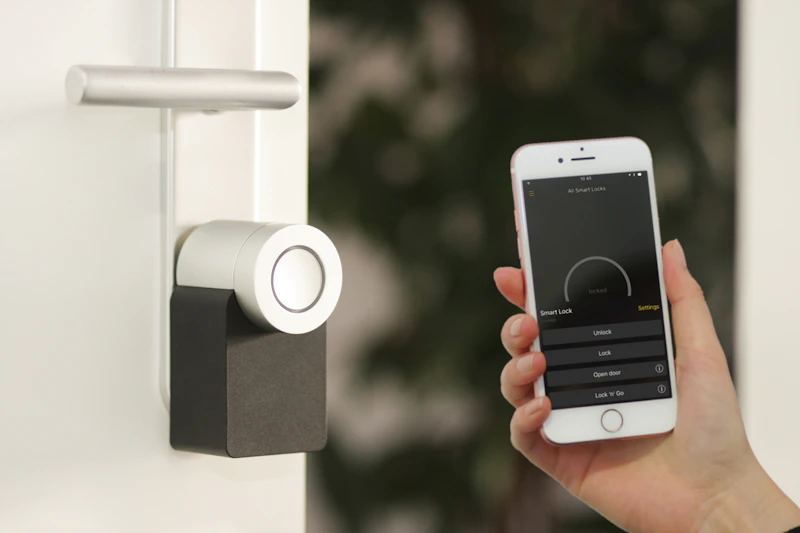
Smart locks: The Yale Assure Lock 2 with Matter support works with every ecosystem and includes auto-lock, remote access (through a Matter controller), and a keypad.
Hub/Controller: If you don't already have a Matter controller, the Apple TV 4K ($130) serves triple duty — streaming box, Thread Border Router, and Matter controller.
The Catch: It's Still Evolving
Matter isn't perfect yet. Some device categories (cameras, doorbells) aren't supported. Some manufacturers have been slow to update existing products with Matter firmware. And the initial setup experience, while better than the old system, can still be confusing when you have multiple controllers from different ecosystems.
But the direction is clear: the entire industry has committed to Matter. Buying Matter-certified devices today means they'll continue to work and gain features as the standard matures. Buying proprietary devices means gambling that the manufacturer will still support them in 3-5 years.
Read our smart home starter guide →
As an Amazon Associate, BestElectronicsReviewed earns from qualifying purchases.
Recommended Products
Top picks from our buying guides
Related Articles
How Zigbee, Z-Wave, and Thread Actually Differ
Smart home protocols are confusing. Here's a plain-English breakdown of the three mesh networking standards and which one matters most in 2026.
ExplainerWhat Is WiFi 7 and Do You Actually Need It? (Today)
What Is WiFi 7 and Do You Actually Need It? (Today) — expert analysis and tested recommendations from BestElectronicsReviewed.
ExplainerHow Robot Vacuum Navigation Works: LiDAR vs Camera vs Gyroscope
The navigation system is the most important feature in a robot vacuum. Here's how LiDAR, camera, and gyroscope systems work, and which cleans best.