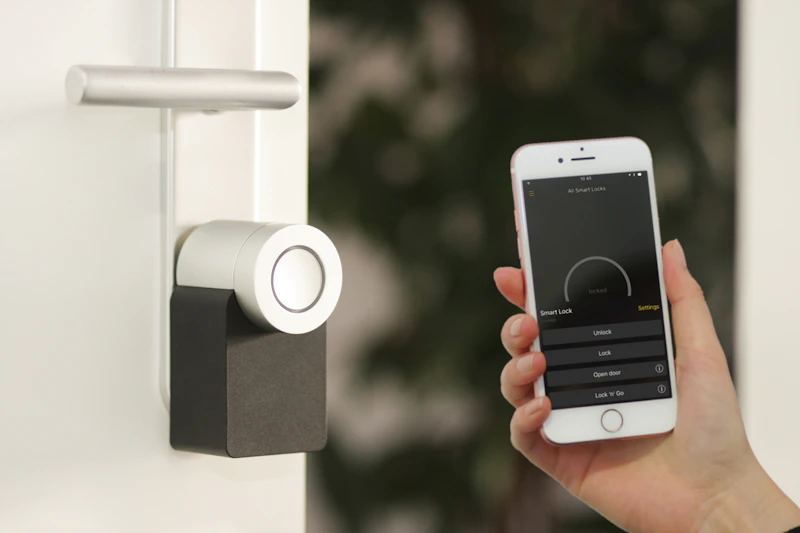
Smart Lock Mistakes That Compromise Your Security
Smart locks add convenience, but common setup mistakes can make your home less secure than a traditional deadbolt. Here is how to avoid them.
BestElectronicsReviewed.com is a participant in the Amazon Services LLC Associates Program. We may earn a commission from qualifying purchases made through links on this page, at no extra cost to you.
Smart locks promise convenience — unlock with your phone, give guests temporary codes, check your lock status from anywhere. They deliver on that promise when set up correctly. But common installation and configuration mistakes can make your smart lock less secure than the $15 deadbolt it replaced. Here are the mistakes that compromise your security and how to fix them.
Mistake #1: Using Simple or Default PINs
Many smart lock owners set their PIN code to 1234, 0000, or their birth year. These are the first codes anyone would try. Some users never change the factory default code at all — and default codes for popular models are published online.
The fix: Set a 6-8 digit PIN that is not based on personal information. Avoid sequential numbers (123456), repeated digits (111111), and dates. Use a random number generator and memorize it. Change the code immediately if you share it with anyone who no longer needs access (former housekeeper, ex-partner, contractor).
The August Wi-Fi Smart Lock (4th Gen) supports unlimited user codes, making it easy to assign unique codes to each family member and revoke individual codes without changing everyone else's.
Mistake #2: Not Enabling Auto-Lock
A smart lock that stays unlocked after you walk through the door is no better than a dumb lock — and potentially worse, because the false sense of security means you stop consciously checking whether you locked up.
The fix: Enable auto-lock with a 30-second to 2-minute delay. This ensures the door locks automatically every time it is closed, eliminating the "did I lock the door?" anxiety and the actual risk of leaving it unlocked.
Mistake #3: Weak or Shared Wi-Fi Passwords
Smart locks that connect via Wi-Fi can be compromised if your home Wi-Fi network uses a weak password. A hacker on your network can potentially control any smart device connected to it.
The fix: Use a strong, unique Wi-Fi password (16+ characters, mix of letters, numbers, and symbols). Enable WPA3 encryption on your router. Consider placing smart home devices on a separate guest network to isolate them from your primary devices.
Read our full smart lock guide →
Mistake #4: Not Keeping a Physical Key Backup
Smart locks can fail. Batteries die (usually with warning, but not always), electronics malfunction, and software glitches happen. If your only entry method is the smart lock and it fails, you are locked out of your own home.
The fix: Keep a physical backup key in a secure location — with a trusted neighbor, in a combination lockbox hidden on your property, or in a secure key safe. The Wyze Lock Bolt uses fingerprint unlock as the primary method with a backup keypad, but even this has failure modes. A physical key is the ultimate backup.
Mistake #5: Sharing Permanent Codes
When you give a contractor, dog walker, or Airbnb guest your permanent lock code, you have given them permanent access to your home. Changing the code afterward is the correct move, but most people forget.
The fix: Use temporary or scheduled codes. Most smart locks allow you to create codes that expire after a set time or only work during specific hours. Create a temporary code for the plumber that expires at 5 PM, a recurring code for the dog walker that only works Monday through Friday 12-1 PM, and a unique code for each Airbnb guest that expires at checkout.
Mistake #6: Ignoring Low Battery Warnings
Smart lock batteries typically last 6-12 months. Most smart locks send low-battery warnings weeks before dying. Ignoring these warnings leads to a dead lock — potentially while you are away from home.
The fix: Replace batteries immediately when warned. Keep spare batteries near the door as a visual reminder. Most smart locks use standard AA or CR123A batteries that are widely available. Better yet, set a calendar reminder to replace batteries every six months proactively.
Mistake #7: Not Checking the Physical Installation
A smart lock is only as strong as its physical mounting. If the lock is improperly installed — loose strike plate, misaligned deadbolt, or worn door frame — the lock can be forced open regardless of its digital security features.
The fix: After installation, verify:
- The deadbolt extends fully into the strike plate
- The strike plate is secured with 3-inch screws (not the 1-inch screws that come standard, which only grip the door frame)
- The door closes tightly without gaps
- The lock mechanism operates smoothly without binding
A 3-inch strike plate screw upgrade costs $5 and provides dramatically more resistance to kick-in attacks because the screws anchor into the wall stud behind the door frame.
Mistake #8: Leaving Bluetooth Discovery Mode On
Some smart locks remain discoverable via Bluetooth after setup. This means anyone with the right tools can detect your lock, identify its model, and potentially exploit known vulnerabilities.
The fix: Disable pairing mode or Bluetooth discovery after initial setup. Only re-enable it when adding new devices or users. Check your lock's app settings for a "pairing mode" or "discoverable" toggle.
The Smart Lock Security Checklist
- [ ] Strong, unique 6-8 digit PIN (not default, not personal)
- [ ] Auto-lock enabled (30-120 second delay)
- [ ] Strong Wi-Fi password with WPA3 encryption
- [ ] Physical key backup in a secure location
- [ ] Temporary codes for non-family access
- [ ] Batteries checked monthly or on schedule
- [ ] Physical installation verified (3-inch screws, aligned deadbolt)
- [ ] Bluetooth discovery mode disabled
Recommended Smart Locks
| Lock | Best Feature | Price | |------|-------------|-------| | August Wi-Fi Smart Lock | Remote access, auto-lock | $199 | | Wyze Lock Bolt | Fingerprint, budget price | $43 | | Schlage Encode Plus | Apple Home Key (tap to unlock) | $249 | | Yale Assure Lock 2 | Touchscreen, module options | $199 |
Read our full home security guide →
Final Thoughts
Smart locks add genuine convenience and can actually improve security — remote monitoring, access logging, and temporary codes are features that traditional locks cannot provide. But they also introduce new attack surfaces and failure modes. By avoiding these eight mistakes, you get the convenience benefits of a smart lock without compromising the security that is its fundamental purpose.
As an Amazon Associate, BestElectronicsReviewed earns from qualifying purchases.
Recommended Products
Top picks from our buying guides
Related Articles
Guide: 5 Monitor Buying Mistakes That Waste Your Money (Spring 2026)
Guide: 5 Monitor Buying Mistakes That Waste Your Money (Spring 2026) — expert analysis and tested recommendations from BestElectronicsReviewed.
MistakesGuide: 5 Monitor Buying Mistakes That Waste Your Money (March 2026)
Guide: 5 Monitor Buying Mistakes That Waste Your Money (March 2026) — expert analysis and tested recommendations from BestElectronicsReviewed.
MistakesStop Making These TV Buying Mistakes
The TV you see in the store is not the TV you get at home. Here are the most common mistakes that lead to buyer's remorse — and how to avoid them.