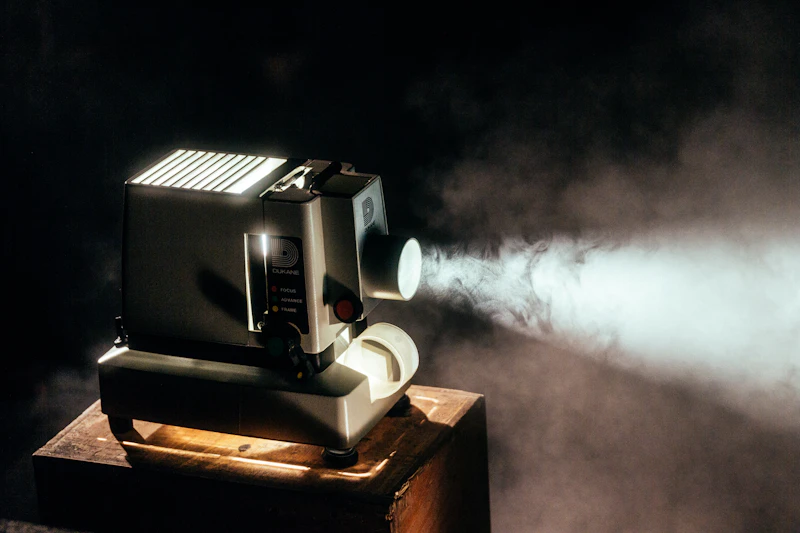
The Projector Renaissance: Why Short-Throw Is Taking Over Living Rooms
Ultra-short-throw projectors sit inches from the wall and project 100-inch images. They're replacing TVs in homes where 85 inches isn't big enough.
BestElectronicsReviewed.com is a participant in the Amazon Services LLC Associates Program. We may earn a commission from qualifying purchases made through links on this page, at no extra cost to you.
The projector market is experiencing a renaissance, driven by ultra-short-throw (UST) laser projectors that have solved the two biggest problems with traditional projectors: placement hassle and image quality. Sales of UST projectors grew 45% year-over-year in 2025, and they're increasingly replacing TVs as the primary display in living rooms.
What Is Ultra-Short-Throw?
Traditional projectors need to be mounted on the ceiling or placed 10-15 feet from the screen. Ultra-short-throw projectors sit inches from the wall and use angled optics to project upward onto a screen or flat wall. Place it on your TV stand, push it against the wall, and you have a 100-inch image.
The key advantage: no ceiling mount, no long cable runs, no shadow-casting when people walk between the projector and screen. It fits into a living room like a soundbar — simple and unobtrusive.
Why UST Projectors Are Suddenly Viable
Laser Light Sources
Traditional projectors use bulbs that dim over time and need replacement every 2,000-5,000 hours ($100-300 per bulb). Laser projectors maintain consistent brightness for 20,000-25,000 hours — about 10-15 years of daily use. No bulb replacements ever.
Brightness Improvements
Early UST projectors produced 2,000-2,500 lumens — usable only in dark rooms. Modern UST projectors output 2,500-3,000+ lumens, making them watchable in rooms with ambient light (though still not as bright as a TV).
The Hisense PX2-PRO UST Projector ($2,499) outputs 2,400 lumens with triple-laser technology and Dolby Vision support. It produces a genuinely impressive 100-120 inch image.
Smart TV Integration
Modern UST projectors run full smart TV operating systems (Google TV, Android TV, or proprietary) with built-in streaming apps. They're not "projectors" anymore — they're TVs that happen to project.
UST Projector vs. Large TV: The Comparison
Screen Size
| Display | Maximum Size | Cost | |---------|-------------|------| | OLED TV | 83-97 inches | $3,500-25,000 | | Mini-LED TV | 85-98 inches | $2,000-6,000 | | UST Projector | 100-150 inches | $1,500-4,000 |
For screens larger than 85 inches, UST projectors are dramatically more affordable than TVs of equivalent size.
Image Quality
TVs win on: Peak brightness, HDR highlights, contrast in bright rooms, and pixel-level precision. A LG C4 OLED 65-inch produces perfect blacks and 1,000+ nits of HDR brightness that no projector can match.
Projectors win on: Image size (100+ inches creates genuine cinematic immersion), reduced eye strain (reflected light vs. direct emitted light), and the "wow factor" of a massive screen.
For Home Theater Enthusiasts
If you have a dedicated home theater room with light control, a UST projector delivers the closest thing to a cinema experience in your home. A 120-inch laser-projected image in a dark room is genuinely spectacular.
For Living Room Use
In a bright living room with lots of windows, a TV is still the better choice. UST projectors look washed out in direct sunlight. With blackout curtains or evening viewing, they're competitive.
Ambient Light Rejecting (ALR) Screens
The secret weapon for UST projectors in living rooms: ALR screens reject ambient light from above and the sides while accepting the projected light from below. This dramatically improves contrast and color in rooms with some ambient light.
An ALR screen adds $500-1,500 to the total cost but transforms the viewing experience in non-dark rooms. For the best results, pair your UST projector with a purpose-built ALR screen.
Our UST Projector Picks
Best Value UST
The Hisense L5G 100-inch UST ($1,997) includes a 100-inch ALR screen and laser light source. It's the cheapest way to get a true 100-inch home theater setup.
Best Overall UST
The Samsung The Premiere LSP9T ($2,499) offers triple-laser technology, 4K resolution, and Samsung's Tizen smart TV platform. Image quality is the best in the sub-$3,000 category.
Best Portable Projector (Not UST)
For a more portable option, the Anker Nebula Capsule 3 ($449) is a soda-can-sized projector with Google TV built in. It won't replace your TV, but it's perfect for backyard movie nights, travel, and bedroom use.
The Setup
UST projector setup is simpler than you'd expect:
- Place the projector on your TV stand or a low table, pushed against the wall
- Connect power and HDMI (or use built-in streaming apps)
- Use the built-in keystone correction and focus adjustment
- If using an ALR screen, mount it on the wall like a picture frame
- Connect a soundbar (most UST projectors have mediocre built-in speakers)
Total setup time: 30-45 minutes for a permanent installation, 5 minutes for a basic projection on a blank wall.
Read our full projector guide →
As an Amazon Associate, BestElectronicsReviewed earns from qualifying purchases. All products are independently selected by our editorial team.
Recommended Products
Top picks from our buying guides
Related Articles
USB4 and What It Means for External GPUs
USB4 promises bandwidth that could make external GPUs viable for gaming laptops. Here is the current state of eGPU technology and where it is heading.
NewsWalkie-Talkies in 2026: Still Useful or Completely Obsolete?
In an era of unlimited cell plans, who needs walkie-talkies? Surprisingly, a lot of people. Here's when they still beat your phone.
NewsRight to Repair in 2026: Which Brands Support Self-Repair?
Right to repair legislation is expanding, and some brands are embracing it. Here's which companies let you fix your own devices and which still fight it.