Intel vs AMD vs Apple Silicon: The 2026 Processor Landscape
The processor war has never been more competitive. Here's where Intel, AMD, and Apple stand in 2026 and what it means for your next laptop or desktop purchase.
BestElectronicsReviewed.com is a participant in the Amazon Services LLC Associates Program. We may earn a commission from qualifying purchases made through links on this page, at no extra cost to you.
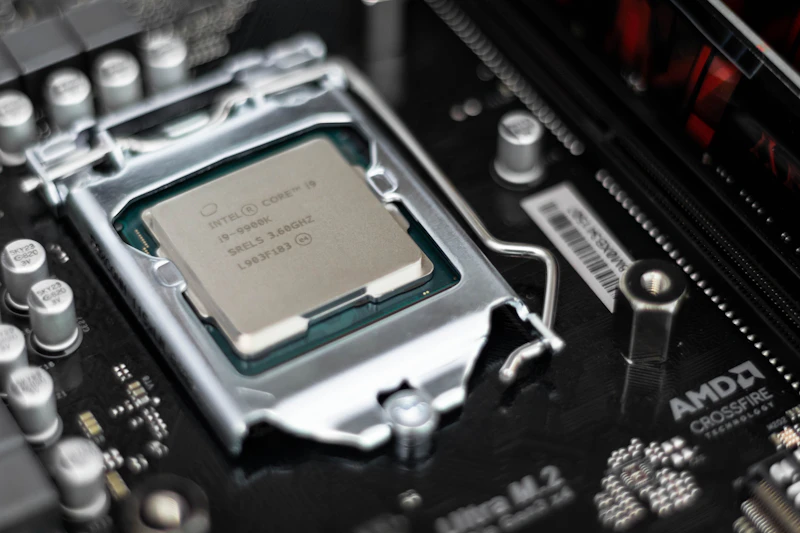
The processor market in 2026 is a three-way battle with no clear overall winner. Each manufacturer leads in different areas, and the right choice depends entirely on your use case. Here's the current state of play.
Apple Silicon: Efficiency King
Apple's M4 generation (M4, M4 Pro, M4 Max, M4 Ultra) continues to dominate efficiency — performance delivered per watt of power consumed. The M4 chip in the MacBook Air matches Intel's Core Ultra 7 in most benchmarks while consuming half the power and requiring no active cooling.
Strengths
- Battery life: 14-18 hours in real-world use, unmatched by any x86 competitor
- Thermal efficiency: Fanless designs in the Air, minimal fan noise in Pro models
- Unified memory: CPU, GPU, and Neural Engine share a single high-bandwidth memory pool, eliminating data transfer bottlenecks
- Media engine: Hardware-accelerated H.264, H.265, and ProRes encoding/decoding makes video editing dramatically faster
- Software optimization: macOS and native apps are tuned specifically for Apple Silicon
Weaknesses
- Locked ecosystem: Apple Silicon runs macOS only (and virtualized operating systems via Parallels/UTM)
- Limited upgradability: RAM and storage are soldered to the chip package
- Gaming: Smaller library of native games compared to Windows, and no support for Nvidia GPUs
- Price: Apple charges a premium for RAM and storage upgrades that cost far less in the PC world
Best For
Creative professionals, students, business users, developers targeting Apple platforms, and anyone who values battery life above all else.
AMD: The Multi-Threaded Monster
AMD's Ryzen 9000 series (Zen 5 architecture) has solidified AMD's position as the multi-threaded performance leader. The Ryzen 9 9950X3D with 3D V-Cache dominates in gaming and multi-threaded productivity workloads.
Strengths
- Multi-threaded performance: Ryzen 9000 leads in rendering, compilation, scientific computing, and workloads that use all available cores
- Gaming (desktop): 3D V-Cache variants are the fastest gaming CPUs available, period
- Price-to-performance: AMD consistently offers more cores and threads per dollar than Intel
- Platform longevity: AM5 motherboards will support future Zen generations, protecting your investment
- Integrated GPUs: Ryzen 7000/8000 APUs have the strongest integrated graphics, capable of 1080p gaming
Weaknesses
- Laptop battery life: AMD laptops still trail Apple Silicon by 30-50% in battery life
- Single-threaded parity: Single-core performance is competitive but doesn't lead
- Mobile thermal management: AMD mobile chips run warmer than Apple Silicon, requiring active cooling
Best For
Desktop gamers, content creators who render video or 3D, developers who compile large codebases, budget-conscious builders, and anyone building a mini PC or workstation.
Intel: The Comeback Attempt
Intel's Core Ultra 200 series (Arrow Lake on desktop, Lunar Lake in laptops) represents Intel's most significant architectural shift in years. The introduction of dedicated NPU (Neural Processing Unit) hardware targets AI workloads, and the hybrid architecture (Performance + Efficiency cores) continues to mature.
Strengths
- AI acceleration: The strongest NPU in any x86 processor, important for emerging AI-powered features in Windows and productivity apps
- Thunderbolt 4 native support: Intel platforms have native Thunderbolt without licensing fees, meaning broader compatibility
- Enterprise integration: Intel platforms remain the default in corporate IT environments
- Single-threaded competitiveness: Arrow Lake matches AMD Zen 5 in single-core workloads
Weaknesses
- Power consumption: Desktop Arrow Lake chips consume 125-250W, significantly more than AMD equivalents for similar performance
- Manufacturing challenges: Intel's foundry struggles have resulted in delayed product launches and supply constraints
- Value proposition: Core for core, Intel often costs more than AMD for equivalent performance
- Laptop battery life: Lunar Lake improved efficiency significantly but still trails Apple Silicon
Best For
Enterprise environments, users who need Thunderbolt 4 without adapters, early adopters of AI-powered Windows features, and upgraders on existing Intel platforms (LGA 1851).
The Verdict for Buyers
Buying a laptop in 2026:
- Default recommendation: M4 MacBook Air for battery life and efficiency
- Windows users who need strong GPU: AMD Ryzen-based laptops
- Enterprise/IT-managed: Intel Core Ultra, for Thunderbolt and IT compatibility
Building a desktop in 2026:
- Gaming: AMD Ryzen 9 9800X3D (3D V-Cache)
- Content creation: AMD Ryzen 9 9950X (16 cores, excellent value)
- General use / office: Intel Core Ultra 5 or AMD Ryzen 5 9600X
Building a home server or NAS:
- AMD Ryzen 5 9600X — excellent multi-threaded performance at low power
The processor war benefits consumers. Competition between all three has driven prices down and performance up faster than at any point in computing history. There are no bad choices in 2026 — only choices that are better or worse for your specific needs.
As an Amazon Associate, BestElectronicsReviewed earns from qualifying purchases.
Recommended Products
Top picks from our buying guides
Apple iPad Air M2 11-inch
#1 in Best iPads of 2026: Which Apple Tablet is Right for You?
Check PriceRelated Articles
USB4 and What It Means for External GPUs
USB4 promises bandwidth that could make external GPUs viable for gaming laptops. Here is the current state of eGPU technology and where it is heading.
NewsWalkie-Talkies in 2026: Still Useful or Completely Obsolete?
In an era of unlimited cell plans, who needs walkie-talkies? Surprisingly, a lot of people. Here's when they still beat your phone.
NewsRight to Repair in 2026: Which Brands Support Self-Repair?
Right to repair legislation is expanding, and some brands are embracing it. Here's which companies let you fix your own devices and which still fight it.