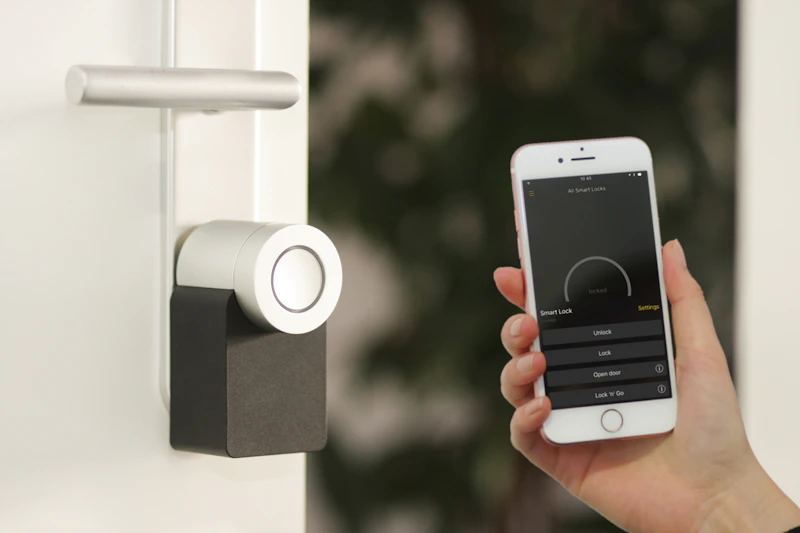
How to Choose the Right Smart Lock for Your Door
Smart locks range from $30 to $350 and the features vary wildly. Here's how to figure out which one actually fits your door, your lifestyle, and your budget.
BestElectronicsReviewed.com is a participant in the Amazon Services LLC Associates Program. We may earn a commission from qualifying purchases made through links on this page, at no extra cost to you.
Smart locks eliminate the frustration of fumbling for keys, let you grant temporary access to guests and cleaners, and tell you whether your door is locked from anywhere. But with dozens of options on the market, choosing the right one requires understanding a few key differences.
First: Check Your Door Compatibility
Before you shop, verify three things about your existing door:
- Deadbolt type: Most smart locks replace a standard single-cylinder deadbolt. If you have a double-cylinder (keyed on both sides) or a mortise lock, your options are limited.
- Door thickness: Standard US doors are 1-3/8" to 1-3/4" thick. Some smart locks do not fit thicker doors.
- Backset measurement: This is the distance from the edge of the door to the center of the deadbolt hole. Standard backsets are 2-3/8" or 2-3/4". Most smart locks include both.
- Handedness: Some locks are handed (left or right swing). Check the product listing.
If your door has a standard deadbolt, almost any smart lock will fit with basic tools and 15-30 minutes of installation.
The Five Types of Smart Locks
1. Retrofit Smart Locks (Keep Your Existing Deadbolt)
These attach to the interior side of your existing deadbolt. You keep your existing keys and exterior hardware. Installation takes 5-10 minutes with no tools.
Best option: The August Wi-Fi Smart Lock (4th Gen) is nearly invisible from outside, works with Alexa, Google, and Apple HomeKit, and the auto-lock/unlock feature is genuinely convenient.
2. Full Replacement Deadbolts with Keypad
These replace your entire deadbolt and add a keypad on the exterior. No keys needed — just a code.
Best option: The Schlage Encode Plus supports Apple Home Key (tap your iPhone or Apple Watch to unlock), has a built-in Wi-Fi chip (no hub needed), and Schlage's commercial-grade build quality.
3. Fingerprint Smart Locks
Biometric locks use your fingerprint for the fastest unlock experience. No codes to remember, no phone to pull out.
Best option: The Ultraloq U-Bolt Pro WiFi combines fingerprint, keypad, app, and physical key access. The fingerprint reader works in under 0.3 seconds and stores up to 100 prints.
4. Keypad-Only Smart Locks (No Wi-Fi)
These offer keypad entry without any smart home connectivity. They are battery-powered, reliable, and simple. Ideal for rental properties or anyone who wants codes without apps or internet dependency.
5. Lever Handle Smart Locks
For interior doors (offices, garages, bedrooms) with lever handles instead of deadbolts. Less common but available from brands like Kwikset and Yale.
Key Features to Compare
Connectivity: Wi-Fi vs. Bluetooth vs. Z-Wave vs. Zigbee
- Wi-Fi: Control from anywhere, no hub required. Higher battery drain.
- Bluetooth: Phone must be nearby to unlock. Best battery life.
- Z-Wave/Zigbee: Requires a smart home hub (SmartThings, Hubitat). Best for automation-heavy homes.
For most people, built-in Wi-Fi is the right choice. The convenience of remote access and notifications outweighs the slightly faster battery drain.
Auto-Lock and Auto-Unlock
Auto-lock re-locks your door after a set time (30 seconds to 5 minutes). Auto-unlock detects your phone approaching and unlocks before you reach the door. Both features are life-changing once you get used to them.
Guest Access
The ability to create temporary PIN codes for house cleaners, dog walkers, Airbnb guests, or family visitors. The best locks let you set schedules (e.g., code works only on Tuesdays from 2-4pm) and receive notifications when codes are used.
Battery Life
Most smart locks run on 4x AA batteries and last 6-12 months. Wi-Fi locks drain faster (4-6 months typical). Always keep spare batteries in the drawer — a dead smart lock is just a regular deadbolt.
Installation Walk-Through
For a full replacement smart lock like the Schlage Encode Plus:
- Remove the existing deadbolt (4 screws on the interior plate, then slide out the bolt assembly)
- Install the new bolt assembly and strike plate
- Mount the exterior keypad assembly, threading the cable through the door
- Connect the cable to the interior assembly and mount it with the provided screws
- Install batteries and test the deadbolt operation
- Download the app and follow the pairing wizard
Total time: 15-30 minutes with a Phillips screwdriver and the included tool.
Smart Home Integration
| Lock | Alexa | Google | HomeKit | SmartThings | |------|-------|--------|---------|-------------| | August Wi-Fi 4th Gen | Yes | Yes | Yes | Yes | | Schlage Encode Plus | Yes | No | Yes (Home Key) | No | | Ultraloq U-Bolt Pro | Yes | Yes | No | Yes | | Yale Assure Lock 2 | Yes | Yes | Yes (w/ module) | Yes |
If Apple Home Key (tap to unlock with iPhone/Watch) is important to you, the Schlage Encode Plus and Yale Assure Lock 2 with the Apple Home module are your only options currently.
Security Concerns Addressed
"Can smart locks be hacked?" In theory, yes — like any networked device. In practice, picking a physical lock is far easier and more common. Quality smart locks use AES-128 or AES-256 encryption, and the major brands have strong security track records.
"What if the battery dies?" Every smart lock with a keypad also has a physical key backup (usually hidden under the keypad cover). You should keep a physical key in a secure location.
"What if my Wi-Fi goes down?" The lock still works via keypad, fingerprint, or physical key. You just lose remote access and notifications until Wi-Fi returns.
Read our full smart lock buying guide →
As an Amazon Associate, BestElectronicsReviewed earns from qualifying purchases.
Recommended Products
Top picks from our buying guides
Related Articles
eSIM for International Travel: Complete Setup Guide for iPhone and Android
Skip the SIM card shops at the airport. An eSIM gives you instant data in 190+ countries at a fraction of roaming costs. Here is how to set one up.
How-ToHome Network Wiring: Run Ethernet Through Your House Like a Pro
WiFi is convenient but ethernet is faster and more reliable. Here is how to run ethernet cables through your home without destroying your walls.
How-ToHow to Light a Video Call So You Look Professional
Lighting is the difference between looking washed out and looking polished on video calls. Here's a simple setup that takes 5 minutes and costs under $50.