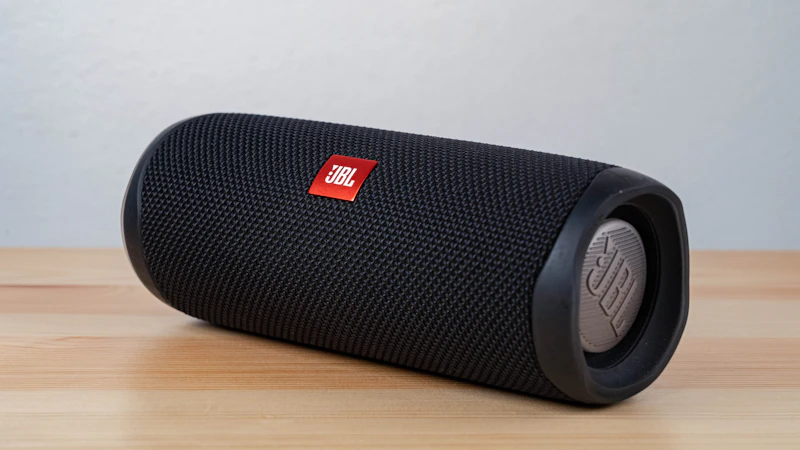
How JBL Dominates the Bluetooth Speaker Market
JBL sells more Bluetooth speakers than any other brand. Here's how their product strategy, pricing, and durability keep them on top.
BestElectronicsReviewed.com is a participant in the Amazon Services LLC Associates Program. We may earn a commission from qualifying purchases made through links on this page, at no extra cost to you.
Walk into any electronics store, scroll through any "best Bluetooth speakers" list, or ask anyone what speaker they bring to the beach, and the answer is overwhelmingly JBL. The brand holds roughly 35% of the portable Bluetooth speaker market — more than Sony, Bose, and Ultimate Ears combined. That dominance isn't an accident.
The Product Ladder Strategy
JBL's genius is offering a speaker at literally every price point, with clear differentiation between tiers:
- JBL Go 4 ($50): Pocket-sized, surprisingly loud, IP67 waterproof
- JBL Clip 5 ($80): Carabiner clip, 12 hours battery, ultra-portable
- JBL Flip 6 ($130): The best-selling Bluetooth speaker in the world
- JBL Charge 5 ($180): 20 hours battery, doubles as a phone charger
- JBL Xtreme 4 ($350): Party-level volume, handles outdoor gatherings
- JBL Boombox 3 ($500): Concert-level output, 24 hours battery
Each tier has a clear reason to exist. The naming convention is intuitive — Go for pockets, Clip for bags, Flip for everyday, Charge for long days, Xtreme for parties. A customer can walk in knowing nothing about speakers and identify the right product in 30 seconds.
Why the Flip 6 Is Everywhere
The JBL Flip 6 occupies the sweet spot that most people want: small enough to throw in a bag, loud enough for a room or small gathering, durable enough to survive drops and water, and priced at $100-130 (frequently on sale). It's the Honda Civic of Bluetooth speakers — not the most exciting, but exactly what most people need.
Sound quality is balanced and room-filling. Bass is impressive for the size. It won't satisfy audiophiles, but it sounds noticeably better than speakers costing half as much. The IP67 rating means it survives submersion in water, pool splashes, and sandy beaches without concern.
Durability as a Brand Promise
JBL speakers have earned a reputation for being nearly indestructible. YouTube is full of torture-test videos where Flip and Charge models survive drops onto concrete, extended water submersion, and being run over by cars. This isn't accidental — JBL's parent company Harman International (owned by Samsung) invests heavily in durability testing.
The practical result is that people recommend JBL speakers to friends with confidence. "Get a Flip, it's indestructible" is word-of-mouth marketing that no advertising budget can replicate.
PartyBoost and Auracast
JBL's PartyBoost feature lets you connect multiple JBL speakers for synchronized playback in stereo or party mode. While multi-speaker pairing exists across brands, JBL's implementation is the most reliable and the most widely used because the install base is enormous. When everyone at the party has a JBL speaker, PartyBoost actually works.
The upcoming JBL Charge 6 adds Bluetooth Auracast support, which allows broadcasting to an unlimited number of compatible speakers regardless of brand. This could be transformative for the speaker market, but JBL's early adoption ensures they stay ahead.
Where JBL Falls Short
JBL's dominance isn't universal. In the premium sound quality space, Bose and Sonos produce better-sounding speakers. The Bose SoundLink Flex sounds more refined than the JBL Flip 6 at a similar price, with better vocal clarity and less distortion at high volumes.
In the ultra-premium portable segment, speakers like the Bang & Olufsen Beosound Explore offer superior materials and more nuanced audio. But these speakers cost 2-4x more and sell in much smaller volumes.
Read our complete Bluetooth speaker buying guide →
The Competitive Landscape
Sony competes aggressively in the mid-range with the ULT Wear and SRS-XB series, but Sony's speaker lineup is more confusing — too many models with unclear differentiation. Ultimate Ears (Boom, Megaboom, Wonderboom) offers comparable durability but fewer price tiers and lower brand recognition outside the outdoor enthusiast community.
Amazon's Echo line and Google's Nest speakers compete on smart features but not on portability or sound quality per dollar. They're different products for different use cases.
JBL's position is defensible because they've built a product line that covers every need, a reputation for durability that's genuinely earned, and a price structure that makes competitors look either overpriced or underfeatured.
As an Amazon Associate, BestElectronicsReviewed earns from qualifying purchases.
Recommended Products
Top picks from our buying guides
Related Articles
How GoPro Reinvented Itself Beyond Action Cameras
GoPro nearly went bankrupt in 2018. Now it's a thriving company with products far beyond action cameras. Here's how they pulled off one of tech's most impressive comebacks.
BrandUpdated: The Complete Guide to Anker Products: What's Worth Buying (Right Now)
Updated: The Complete Guide to Anker Products: What's Worth Buying (Right Now) — expert analysis and tested recommendations from BestElectronicsReviewed.
BrandSamsung Galaxy Ecosystem 2026: Phone Watch Buds Tablet
Samsung's Galaxy ecosystem rivals Apple's for seamless integration. Here is how the Galaxy phone, watch, buds, and tablet work together in 2026.