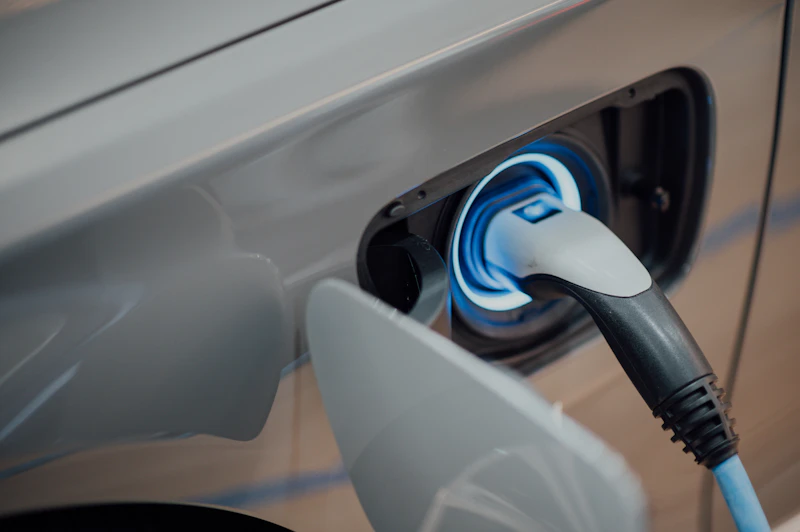
Electric Vehicle Home Charger Guide 2026
Level 2 home charging adds 25-40 miles per hour. Here's what to know about installing one, which charger to buy, and what it'll cost.
BestElectronicsReviewed.com is a participant in the Amazon Services LLC Associates Program. We may earn a commission from qualifying purchases made through links on this page, at no extra cost to you.
If you own or are considering an EV, a Level 2 home charger transforms the ownership experience. Instead of hunting for public chargers or waiting hours on a Level 1 (household outlet) charger, you plug in when you get home and wake up to a full battery every morning. Here's the complete guide to home EV charging in 2026.
Charging Levels Explained
Level 1 (120V Household Outlet)
Every EV comes with a Level 1 charging cable that plugs into a standard household outlet. It delivers 3-5 miles of range per hour of charging. For a typical EV with 250 miles of range, a full charge from empty takes 50+ hours.
Adequate if: You drive less than 30 miles per day and can charge overnight. Inadequate if: You drive more than 40 miles daily or need flexibility.
Level 2 (240V Dedicated Circuit)
A Level 2 charger uses a 240V outlet (like your dryer or oven) and delivers 25-40 miles of range per hour. A typical EV charges from 20% to 100% in 6-8 hours overnight.
This is what most EV owners install at home. It's fast enough for overnight charging and costs $300-700 for the charger plus $200-1,000 for installation.
Level 3 (DC Fast Charging)
DC fast chargers (Tesla Supercharger, Electrify America) deliver 150-350 miles per hour of charging. These are commercial installations costing $50,000+ and are found at public charging stations, not homes.
Choosing a Level 2 Home Charger
Key Specifications
Amperage: Higher amps = faster charging. Most Level 2 chargers are 32A, 40A, or 48A. A 48A charger on a 60A circuit delivers maximum home charging speed (about 40 miles/hour). A 32A charger on a 40A circuit still delivers 25 miles/hour — plenty for overnight charging.
Connector type: All non-Tesla EVs in North America use the J1772 connector. Tesla uses its proprietary NACS connector but includes a J1772 adapter. In 2026, most new chargers support both or come with adapters.
Smart features: Wi-Fi connectivity, app control, scheduled charging, energy monitoring, and utility integration for time-of-use rate optimization.
Cable length: 20-25 feet is standard. Measure the distance from your electrical panel (or planned outlet location) to where your car's charge port sits when parked.
Our Picks
Best Overall: The Grizzl-E Classic 40A ($399) is the most reliable, weather-resistant Level 2 charger available. NEMA 4 rated (fully waterproof), 40A output, 24-foot cable, and a 3-year warranty. No smart features — just rock-solid charging.
Best Smart Charger: The Emporia Level 2 Smart Charger 48A ($449) offers Wi-Fi app control, scheduled charging to minimize electricity costs, energy monitoring, and compatibility with Emporia's home energy management system.
Best Budget: The Lectron V-Box 40A ($299) is a no-frills 40A charger with a 24-foot cable and NEMA 6-50 plug. Plug it into an existing 240V outlet and start charging.
Installation: What to Expect
DIY-Possible (Plug-in Chargers)
If you already have a 240V outlet in your garage (like a dryer outlet), you can buy a plug-in charger, plug it in, and start charging immediately. No electrician needed.
NEMA 14-50 is the most common 240V outlet for EV charging. If your garage has a dryer outlet (NEMA 10-30) or a different 240V outlet, you'll need an adapter or a charger with the matching plug.
Professional Installation (Hardwired)
Hardwired chargers are permanently connected to your electrical panel. This requires a licensed electrician and typically costs $200-1,000 depending on:
- Distance from panel to installation location: Longer cable runs cost more
- Panel capacity: If your electrical panel is full or undersized, you may need an upgrade ($1,000-2,500)
- Permit requirements: Many municipalities require an electrical permit for 240V installations ($50-200)
Total Cost Estimate
| Component | Low End | High End | |-----------|---------|----------| | Charger | $299 | $699 | | Electrician (install) | $200 | $1,000 | | Panel upgrade (if needed) | $0 | $2,500 | | Permit | $0 | $200 | | Total | $499 | $4,399 |
Most installations fall in the $500-1,500 range.
Federal Tax Credit
The federal Alternative Fuel Vehicle Refueling Property Credit covers 30% of EV charger costs (including installation), up to $1,000 for residential installations. This effectively reduces a $1,000 total installation to $700 after tax credit.
Smart Charging Tips
Time-of-Use Rates
Many utilities offer time-of-use (TOU) rates with cheaper electricity during off-peak hours (typically 9 PM - 6 AM). Set your smart charger to start charging at the off-peak rate start time. This can reduce charging costs by 30-50%.
Solar Integration
If you have home solar panels, charge during peak solar production (midday) to use free electricity. Smart chargers with solar integration optimize charging based on real-time solar output.
Battery Health
Most EVs recommend keeping the battery between 20% and 80% for daily driving, reserving 100% charges for long trips. Set your car's charge limit to 80% for daily use. This extends battery lifespan significantly.
Read our full car tech guide →
As an Amazon Associate, BestElectronicsReviewed earns from qualifying purchases. All products are independently selected by our editorial team.
Recommended Products
Top picks from our buying guides
Related Articles
USB4 and What It Means for External GPUs
USB4 promises bandwidth that could make external GPUs viable for gaming laptops. Here is the current state of eGPU technology and where it is heading.
NewsWalkie-Talkies in 2026: Still Useful or Completely Obsolete?
In an era of unlimited cell plans, who needs walkie-talkies? Surprisingly, a lot of people. Here's when they still beat your phone.
NewsRight to Repair in 2026: Which Brands Support Self-Repair?
Right to repair legislation is expanding, and some brands are embracing it. Here's which companies let you fix your own devices and which still fight it.