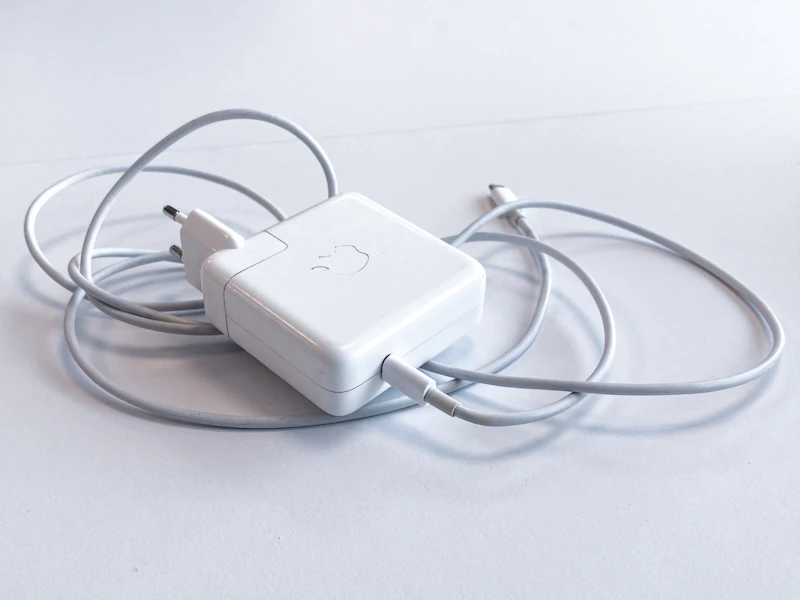
The Complete Guide to Power Delivery and Fast Charging
USB PD, Quick Charge, VOOC, SuperCharge — fast charging standards are a mess. Here's what each one does, which ones are compatible, and what charger you actually need.
BestElectronicsReviewed.com is a participant in the Amazon Services LLC Associates Program. We may earn a commission from qualifying purchases made through links on this page, at no extra cost to you.
Your phone can charge from 0 to 50% in 15 minutes — but only if you use the right charger with the right cable connected to the right port. The fast charging ecosystem is confusing, proprietary, and fragmented. This guide cuts through the noise.
How Fast Charging Works
Standard USB charging delivers 5V at 0.5A = 2.5 watts. At this rate, charging a modern phone takes 4-6 hours.
Fast charging increases wattage by raising voltage, amperage, or both. A 65W charger delivers 20V at 3.25A, which charges a phone from 0-50% in 15-20 minutes and a laptop in about an hour.
The key constraint: both the charger and the device must support the same fast charging protocol. Otherwise, the device falls back to standard 5V charging.
The Major Fast Charging Standards
USB Power Delivery (USB PD)
The universal standard, supported by almost every modern device. USB PD negotiates between charger and device to determine the optimal voltage and current.
- Max power: 240W (USB PD 3.1)
- Common levels: 18W, 25W, 45W, 65W, 100W, 140W
- Compatible devices: iPhones (8+), Samsung Galaxy (S8+), Google Pixel, most laptops, Nintendo Switch, Steam Deck
- Cable needed: USB-C to USB-C with PD support
USB PD is the one standard to rule them all. If you buy one charger, make it a USB PD charger.
Our pick: The Anker 735 Charger (GaNPrime 65W) has two USB-C ports and one USB-A port, charges a MacBook Air at full speed, and is compact enough for travel. This replaces your phone charger, laptop charger, and tablet charger.
Qualcomm Quick Charge (QC)
The most common Android fast charging standard. Most versions are now compatible with USB PD.
- QC 2.0: Up to 18W (9V/2A)
- QC 3.0: Up to 18W with voltage stepping
- QC 4.0/4+: Up to 27W, USB PD compatible
- QC 5.0: Up to 100W+
Quick Charge 4.0 and later are cross-compatible with USB PD, so a USB PD charger fast-charges most Quick Charge devices.
Samsung Adaptive Fast Charging / Super Fast Charging
Samsung devices support USB PD and their own protocols:
- Adaptive Fast Charging: 15W (older Galaxy phones)
- Super Fast Charging: 25W (most current Galaxy phones)
- Super Fast Charging 2.0: 45W (Galaxy S23 Ultra, S24 Ultra)
A 45W USB PD charger fast-charges any Samsung phone. The Samsung 45W USB-C Charger is the official option if you want guaranteed compatibility.
Apple Fast Charging
iPhones support USB PD starting with the iPhone 8. Apple does not have a proprietary fast charging protocol — it is just USB PD.
- iPhone 15/16 series: Up to 27W with USB PD (USB-C)
- iPhone 12-14: Up to 20W with USB PD (Lightning)
Any 30W+ USB PD charger will fast-charge an iPhone at its maximum rate.
OnePlus SUPERVOOC / OPPO VOOC
OnePlus and OPPO use proprietary high-amperage charging that pushes 80-100W. The catch: you must use the included charger and cable. Third-party USB PD chargers will charge these phones, but not at the full proprietary speed.
Xiaomi HyperCharge
Xiaomi pushes up to 120W (and has demonstrated 200W). Like VOOC, it requires proprietary hardware for maximum speed. USB PD falls back to 27W.
What Charger Should You Actually Buy?
For 90% of people, a single 65W USB PD GaN charger replaces every charger they own:
- Charges iPhone at full speed (27W)
- Charges Samsung at Super Fast speed (25-45W)
- Charges most laptops (MacBook Air, Dell XPS, etc.)
- Charges tablets, earbuds, game consoles
Best overall: Anker 735 GaNPrime 65W — 2x USB-C + 1x USB-A, compact Best travel: Anker Nano II 65W — Single USB-C, smallest 65W charger available Best multi-device: Anker 737 GaNPrime 120W — Charges a laptop and two phones simultaneously at full speed
Cable Matters (Literally)
A charger is only as good as the cable connecting it. Many USB-C cables only support USB 2.0 data and 15W charging, even though they physically fit.
For fast charging, use a cable rated for the wattage you need. The cable that came with your device is always safe. For replacements, look for cables explicitly rated for 60W, 100W, or 240W.
Fast Charging and Battery Health
The number one concern people have about fast charging: does it degrade the battery?
The short answer: Yes, slightly. Fast charging generates more heat, and heat is the enemy of lithium-ion batteries. However, modern phones manage this intelligently:
- They fast-charge to 80% and then slow down
- Temperature sensors throttle charging if the phone gets too hot
- Adaptive charging features learn your schedule and slow charge overnight
Practical advice:
- Use fast charging when you need it (morning rush, airport layover)
- Use standard charging when you can (overnight, at your desk)
- Do not leave your phone on a fast charger 24/7
- Keep your phone case off while fast charging (better heat dissipation)
- Enable "Optimized Battery Charging" or equivalent in your phone settings
GaN vs. Silicon Chargers
GaN (Gallium Nitride) chargers are smaller, lighter, and more efficient than traditional silicon chargers at the same wattage. Every charger we recommend in this guide uses GaN technology. The era of carrying a brick-sized laptop charger is over.
Browse our full charger guide →
As an Amazon Associate, BestElectronicsReviewed earns from qualifying purchases.
Recommended Products
Top picks from our buying guides
Related Articles
eSIM for International Travel: Complete Setup Guide for iPhone and Android
Skip the SIM card shops at the airport. An eSIM gives you instant data in 190+ countries at a fraction of roaming costs. Here is how to set one up.
How-ToHome Network Wiring: Run Ethernet Through Your House Like a Pro
WiFi is convenient but ethernet is faster and more reliable. Here is how to run ethernet cables through your home without destroying your walls.
How-ToHow to Light a Video Call So You Look Professional
Lighting is the difference between looking washed out and looking polished on video calls. Here's a simple setup that takes 5 minutes and costs under $50.