Best Home Security on a Budget
Protect your home without a monthly monitoring contract. These affordable DIY security systems deliver professional-grade protection for under $300.
BestElectronicsReviewed.com is a participant in the Amazon Services LLC Associates Program. We may earn a commission from qualifying purchases made through links on this page, at no extra cost to you.
Home security used to mean a contract with ADT, professional installation, and $40-60 per month in monitoring fees. In 2026, DIY smart home security systems deliver equal or better protection for a fraction of the cost — often with no monthly fees at all. We tested seven budget security setups over three months, evaluating detection accuracy, app responsiveness, false alarm rates, and ease of installation.
The Big Decision: Monitored vs. Self-Monitored
Before choosing equipment, decide whether you want professional monitoring (a call center contacts police for you) or self-monitoring (you receive alerts and call police yourself).
Professional monitoring costs $10-25 per month and provides 24/7 response, even when your phone is off or you are in a dead zone. Ring, SimpliSafe, and Abode all offer affordable plans.
Self-monitoring is free with most systems. You receive instant push notifications when sensors trigger, and you decide whether to call police. The trade-off is that if you miss the notification — asleep with your phone on silent, for example — nobody responds.
Our recommendation: start with self-monitoring and upgrade to professional monitoring if you find yourself wanting the peace of mind. Most systems let you add monitoring at any time.
Best Budget System: Ring Alarm (2nd Gen)
Our pick: The Ring Alarm 8-Piece Kit (2nd Gen) is the best entry point for budget home security. The kit includes a base station, keypad, contact sensor for the front door, motion detector, and range extender. Self-monitoring is completely free — you get instant push notifications for every triggered sensor.
Optional Ring Protect Plus ($20/month) adds 24/7 professional monitoring, cellular backup (system works even if your Wi-Fi goes down), and 60 days of video history for all Ring cameras.
Installation is genuinely DIY — adhesive-backed sensors peel and stick to doors and windows. The entire 8-piece kit can be installed in under 30 minutes with zero tools.
Cameras: Eyes on Your Property
Outdoor cameras are the single biggest deterrent against break-ins. A visible camera makes burglars move on to an easier target.
Our pick for outdoor: The Blink Outdoor 4 is a wireless, battery-powered camera that runs for up to two years on AA lithium batteries. No wiring, no outlet needed — stick it anywhere with the included mount. It records 1080p video with night vision, motion detection zones, and two-way audio.
The catch: video storage requires either Blink's subscription ($3/month per camera) or a Blink Sync Module 2 with a USB drive for local storage ($0 per month after the one-time purchase).
Our pick for indoor: The Wyze Cam v3 at $25 is absurdly capable for the price. Full color night vision (not just infrared), person and pet detection, two-way audio, and optional smoke/CO alarm detection. It records to a microSD card with no subscription required, though Wyze Cam Plus ($2/month) adds AI person detection and cloud storage.
Read our full home security camera guide →
Smart Locks: Control Access
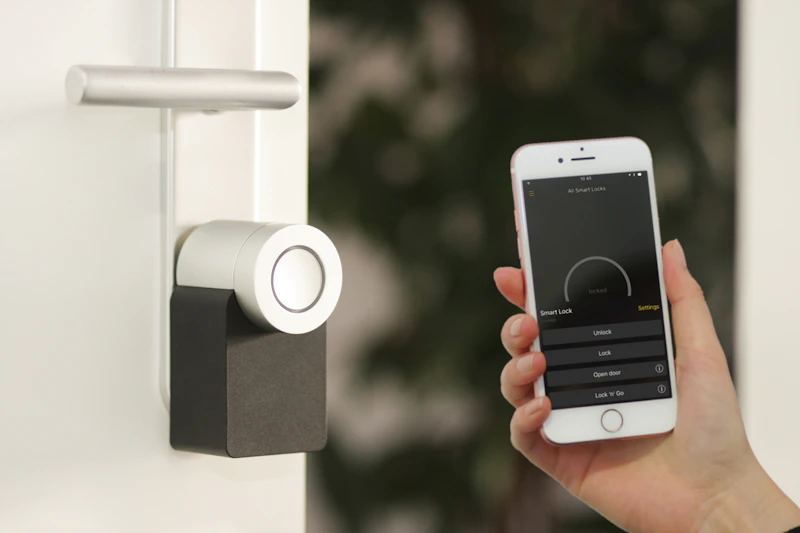
A smart lock lets you lock and unlock remotely, give temporary codes to guests and service workers, and receive alerts when the door is opened.
Our pick: The Wyze Lock Bolt at $43 is the budget champion. Fingerprint unlock works in under a second, the Bluetooth connection is reliable, and the auto-lock feature ensures you never accidentally leave the door unlocked.
For a more connected option, the August Wi-Fi Smart Lock (4th Gen) works with existing deadbolts (no replacement needed), offers remote control via Wi-Fi, and integrates with Alexa, Google Assistant, and Apple HomeKit. The DoorSense feature tells you whether the door is open or closed — not just locked or unlocked.
Video Doorbell: See Who Is There
A video doorbell covers your most vulnerable entry point and deters package thieves.
Our pick: The Ring Video Doorbell (2nd Gen) at $99 shoots 1080p video, has two-way audio, and sends motion alerts to your phone. You can answer the door from anywhere — at work, on vacation, or upstairs in bed. The motion-activated recording captures everyone who approaches your door, whether they ring the bell or not.
Lighting: The Free Security System
Smart outdoor lighting is the cheapest and most effective security measure available. A well-lit exterior eliminates hiding spots and signals an occupied, monitored home.
Motion-activated floodlights over entry points, driveway, and backyard cost $20-40 each and deter 90 percent of opportunistic break-ins. Smart lights on timers inside the house create the appearance of occupancy when you are away.
The Complete Budget Security System
Here is a complete home security setup for under $300:
| Component | Product | Cost | |-----------|---------|------| | Alarm system | Ring Alarm 8-Piece Kit | $149 | | Outdoor camera | Blink Outdoor 4 | $59 | | Indoor camera | Wyze Cam v3 | $25 | | Smart lock | Wyze Lock Bolt | $43 | | Video doorbell | Ring Video Doorbell 2nd Gen | $99 | | Total | | $375 |
To hit $300, drop the video doorbell initially (the Blink outdoor camera can cover your front door) for a total of $276.
Common Budget Security Mistakes
Skipping door and window sensors. Cameras are reactive — they record after something happens. Sensors are proactive — they alert you the moment a door or window opens.
Relying solely on cameras. If a burglar wears a hoodie and mask, camera footage is useless for identification. Sensors, alarms, and deterrents (lights, visible cameras) are more effective at prevention.
Forgetting about Wi-Fi. Wireless security devices need strong Wi-Fi coverage at every camera and sensor location. A dead zone in your backyard means your outdoor camera loses connection at the worst possible time.
Read our full smart lock guide →
Final Thoughts
A $300 DIY security system in 2026 provides better coverage, smarter alerts, and more flexibility than the $1,500 professionally installed systems of a decade ago. Start with the basics — an alarm system and one or two cameras — and expand over time. The goal is layered security: visible deterrents, perimeter alerts, and video evidence. You do not need every layer on day one.
As an Amazon Associate, BestElectronicsReviewed earns from qualifying purchases.
Recommended Products
Top picks from our buying guides
Roborock S8 MaxV Ultra
#1 in Best Outdoor Security Cameras Worth the Money 2026
Check PriceRelated Articles
Best Kitchen Tech for Meal Prep
Meal prep is easier with the right gadgets. From food scales to vacuum sealers, these kitchen electronics save hours every week.
Buyer GuidesWhole House Water Filtration: Smart Filters and Monitoring Systems
From under-sink filters to whole-house systems, smart water filtration monitors filter life, detects contaminants, and ensures clean water from every tap.
Buyer GuidesBest Homework and Study Apps for Middle and High School Students
From math solvers to flashcard apps to essay helpers, these study tools help older students work smarter without doing the work for them.