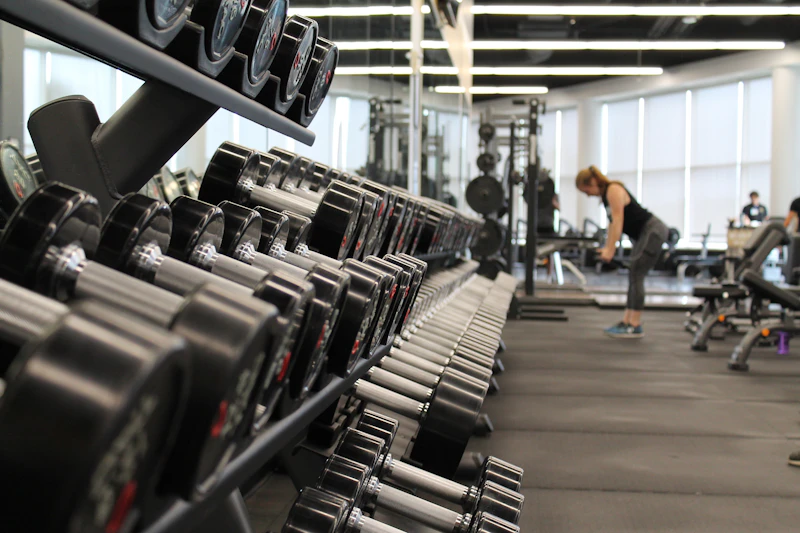
Best Home Gym Tech 2026
Transform your garage or spare room into a smart gym with these fitness tech picks that track, motivate, and deliver real results.
BestElectronicsReviewed.com is a participant in the Amazon Services LLC Associates Program. We may earn a commission from qualifying purchases made through links on this page, at no extra cost to you.
The home gym evolved dramatically in the past few years. What used to be a dusty treadmill in the basement is now a connected, data-driven fitness environment that rivals commercial gyms for effectiveness. The best part: you do not need a Peloton-sized budget to build one. Smart fitness tech in 2026 ranges from $20 gadgets that transform bodyweight workouts to full connected systems that replace a gym membership entirely.
The Foundation: A Quality Fitness Tracker
Every home gym starts with data. A fitness tracker monitors heart rate, tracks workouts, measures recovery, and keeps you accountable when motivation fades.
Our pick: The Garmin Venu Sq 2 is the best fitness tracker for home gym users. It has built-in workout profiles for strength training, HIIT, yoga, and cardio, with animated on-screen exercises that guide you through workouts. The Body Battery feature tells you whether you are recovered enough for an intense session or should go easy today — surprisingly accurate once it has a week of your data.
For Apple users, the Apple Watch SE integrates seamlessly with Apple Fitness+ and tracks every metric you need. Its fall detection and crash detection features add a safety layer for solo workouts with heavy weights.
Smart Strength Training
Traditional dumbbells work fine, but adjustable smart dumbbells save space and add digital tracking.
Our pick: The Bowflex SelectTech 552 remain the gold standard for adjustable dumbbells. Each dumbbell adjusts from 5 to 52.5 pounds in 2.5-pound increments, replacing 15 pairs of dumbbells. The connected app tracks reps, sets, and weight selection.
For resistance training without dumbbells, smart resistance bands with built-in sensors are emerging, but the technology is still maturing. Standard resistance bands remain the better value — a complete set costs $25 and provides enough resistance variety for most bodyweight-plus-band workouts.
Read our full home gym equipment guide →
Cardio: Beyond the Treadmill
Connected cardio equipment dominates the home gym market, but you do not need a $2,000 machine.
Our pick: A jump rope is the most space-efficient, cost-effective cardio tool that exists. The Tangram Smart Rope Rookie counts jumps via a built-in sensor and syncs to your phone. Ten minutes of jump rope burns roughly the same calories as 30 minutes of jogging — and the rope fits in a drawer.
For those who want a connected machine, the Sunny Health Magnetic Rowing Machine at around $200 delivers a full-body workout in minimal floor space. Rowing works 86 percent of your muscles simultaneously and the magnetic resistance is whisper-quiet — critical for apartment home gyms.
Recovery Tech: The Missing Piece
Most home gym owners invest in workout equipment and ignore recovery. This is backwards. Recovery determines how frequently and intensely you can train.
Our pick: The Theragun Mini (2nd Gen) is a portable percussion massage gun that fits in your hand and delivers legitimate deep-tissue relief. Three speed settings, a 150-minute battery life, and the ability to target knots and tight spots after every workout. The Mini sacrifices some power compared to the full-size Theragun Pro, but for home gym use, it is more than sufficient.
A foam roller ($15-25) is the other essential recovery tool. Five minutes of foam rolling after every workout reduces soreness and improves mobility.
Smart Mirrors and Screens
Connected fitness mirrors and screens provide guided workouts with form correction and live classes.
The reality check: these products range from $1,000 to $2,500 and require monthly subscriptions of $15-40. For most home gym users, a tablet or phone mounted on a stand provides the same content (via YouTube, Peloton app, Apple Fitness+, or Nike Training Club) at a fraction of the cost.
Our budget alternative: Mount a Fire HD 10 tablet on a floor stand in front of your workout area. It is a large enough screen to follow along with workout videos, and the total investment is under $150 including the stand — compared to $1,500 for a connected mirror.
Gym Audio
Working out in silence is miserable. A Bluetooth speaker that survives sweat and dropped dumbbells is essential.
Our pick: The JBL Clip 4 clips to a rack or shelf, is IP67 waterproof (survives sweat, dust, and outdoor use), and pumps out surprising volume for its tiny size. The 10-hour battery means you charge it once a week.
The Complete Home Gym Tech Stack
Budget tier ($200):
- Garmin Venu Sq 2 or fitness app on existing phone
- Jump rope with counter
- Resistance band set
- Foam roller
- Bluetooth speaker
Mid tier ($600):
- All of the above, plus:
- Bowflex SelectTech 552 dumbbells
- Theragun Mini
Premium tier ($1,200):
- All of the above, plus:
- Rowing machine
- Tablet on floor stand with Fitness+ or Peloton subscription
- Heart rate chest strap for accurate zone training
Final Thoughts
The best home gym tech does one thing: it removes excuses. When your gym is 10 steps away, equipped with the right gear, and stocked with guided workouts on a screen, the friction of working out drops to nearly zero. Start with a fitness tracker and a set of adjustable dumbbells, and build from there as your routine solidifies.
As an Amazon Associate, BestElectronicsReviewed earns from qualifying purchases.
Recommended Products
Top picks from our buying guides
Related Articles
Best Kitchen Tech for Meal Prep
Meal prep is easier with the right gadgets. From food scales to vacuum sealers, these kitchen electronics save hours every week.
Buyer GuidesWhole House Water Filtration: Smart Filters and Monitoring Systems
From under-sink filters to whole-house systems, smart water filtration monitors filter life, detects contaminants, and ensures clean water from every tap.
Buyer GuidesBest Homework and Study Apps for Middle and High School Students
From math solvers to flashcard apps to essay helpers, these study tools help older students work smarter without doing the work for them.