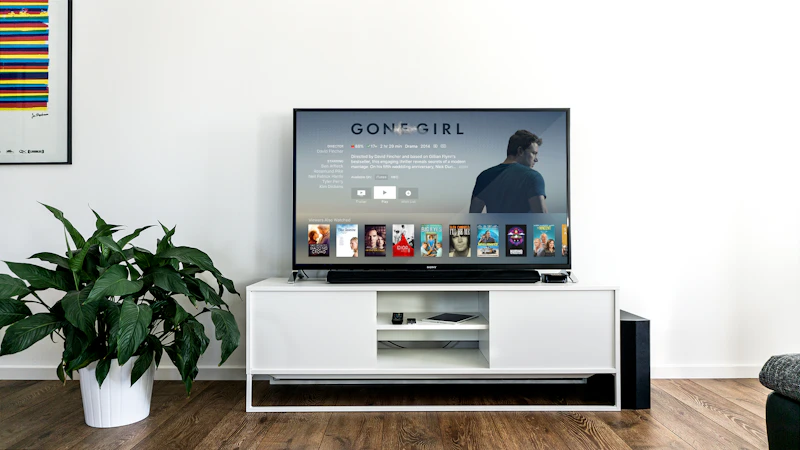
7 Mistakes People Make When Buying a TV
Most TV buying regrets come from the same handful of avoidable mistakes. Here are the seven most common ones — and what to do instead.
BestElectronicsReviewed.com is a participant in the Amazon Services LLC Associates Program. We may earn a commission from qualifying purchases made through links on this page, at no extra cost to you.
Buying a TV should be straightforward, but manufacturer marketing, confusing specifications, and showroom tricks lead millions of people to regret their purchase within the first year. After reviewing dozens of TVs and reading thousands of reader questions, these are the seven mistakes we see most often — and every one of them is avoidable.
Mistake 1: Buying Based on How It Looks in the Store
Showroom TVs run in "Vivid" or "Dynamic" mode with cranked brightness and oversaturated colors. The lighting in electronics stores is fluorescent and extremely bright — nothing like your living room. A TV that looks best in Best Buy often looks garish at home, while a TV that looks subdued in the store may produce the most accurate, cinematic picture in a dim living room.
What to do instead: Ignore the showroom entirely. Read reviews from Rtings.com (they measure every aspect of TV performance with calibrated equipment in controlled conditions). Trust the measurements over your showroom impression.
Mistake 2: Buying Too Small
The number one regret among TV buyers is "I should have gone bigger." People consistently buy TVs 10-15 inches smaller than what would actually fit their space. If your couch is 8 feet from the TV, a 55-inch screen is the minimum for an immersive experience. At 10 feet, you want 65 inches.
The viewing distance formula for 4K content: Divide your viewing distance in inches by 1.5 to get the ideal TV size. Eight feet (96 inches) divided by 1.5 = 64 inches. Round up to 65.
A larger TV from a good budget brand beats a smaller TV from a premium brand every time. A 65" Hisense U7 ($650) provides a more immersive experience than a 55" Sony X90L ($900) at the same viewing distance.
Mistake 3: Paying for 8K
8K TVs exist but have virtually zero content to display. No streaming service offers 8K content. No broadcast standard supports 8K. The handful of 8K demo reels that exist are indistinguishable from 4K at normal viewing distances below 85 inches.
An 8K TV takes money that could go toward better picture quality (OLED vs LED, better HDR performance, superior processing) and puts it into a resolution you can't use or perceive. At 65 inches and a normal viewing distance, the human eye cannot resolve the difference between 4K and 8K. Period.
What to do instead: Buy the best 4K TV your budget allows. The Sony X90L or LG C4 OLED will look better than any 8K TV at the same price because the money goes into contrast, color accuracy, and processing instead of unused resolution.
Mistake 4: Ignoring HDR Performance
HDR (High Dynamic Range) is the single biggest picture quality improvement since the jump from SD to HD, but TVs handle it very differently. A cheap TV might technically accept an HDR signal but lack the brightness and contrast to display it properly — resulting in a dim, washed-out image that looks worse than SDR.
Good HDR requires two things: peak brightness above 600 nits (1,000+ nits is ideal) and full-array local dimming (or OLED). Edge-lit LED TVs with "HDR support" often produce worse HDR than a good SDR display.
Check the HDR brightness rating in reviews, not just whether the spec sheet says "HDR10" or "Dolby Vision." Those labels only mean the TV accepts the signal — they say nothing about how well it's displayed.
Mistake 5: Buying the Wrong Panel Type for Your Room
OLED produces perfect blacks and incredible contrast but maxes out around 800-1,000 nits on current panels. In a bright, sunlit room, OLEDs can look dim and reflective. They're best in controlled-lighting environments — dedicated home theaters, basements, or rooms with blackout curtains.
LED/LCD with full-array local dimming gets brighter (1,500-3,000+ nits on premium models) and handles bright rooms well, but blacks look gray compared to OLED. These are better for sunny living rooms and spaces where you can't control ambient light.
What to do: Evaluate your room's lighting honestly before choosing. If you watch TV primarily at night with lights dimmed, OLED is the clear winner. If your TV faces a window with afternoon sun, a bright LED/LCD will serve you better.
Mistake 6: Skipping the Sound System
TV speakers have gotten worse as TVs have gotten thinner. There's no room for decent drivers in a TV that's 0.5 inches thick. Even a $100 soundbar produces dramatically better dialogue clarity, bass response, and overall sound quality than any TV's built-in speakers.
The Vizio M-Series 2.1 soundbar ($150) includes a wireless subwoofer and Dolby Atmos support. It's the cheapest genuinely good soundbar system we've tested. Pair it with any TV and the viewing experience improves more than spending an extra $300 on the TV itself.
Mistake 7: Not Wall-Mounting (Or Mounting at the Wrong Height)
A TV on a stand wastes floor space, limits size options (your stand needs to support the weight), and usually positions the screen too low. A wall-mounted TV at the correct height looks cleaner and provides a better viewing experience.
The correct mounting height: The center of the screen should be at seated eye level. For most people sitting on a standard couch, this means the bottom of a 65" TV should be 24-28 inches off the floor. TVs mounted above fireplaces are almost always too high, causing neck strain and a worse viewing angle.
Every flat-panel TV from the last decade uses a standard VESA mount pattern. A basic wall mount costs $15-30 and installs with four bolts.
Read our complete TV buying guide →
As an Amazon Associate, BestElectronicsReviewed earns from qualifying purchases.
Recommended Products
Top picks from our buying guides
Related Articles
Guide: 5 Monitor Buying Mistakes That Waste Your Money (Spring 2026)
Guide: 5 Monitor Buying Mistakes That Waste Your Money (Spring 2026) — expert analysis and tested recommendations from BestElectronicsReviewed.
MistakesGuide: 5 Monitor Buying Mistakes That Waste Your Money (March 2026)
Guide: 5 Monitor Buying Mistakes That Waste Your Money (March 2026) — expert analysis and tested recommendations from BestElectronicsReviewed.
MistakesStop Making These TV Buying Mistakes
The TV you see in the store is not the TV you get at home. Here are the most common mistakes that lead to buyer's remorse — and how to avoid them.